

Source: The Conversation (Au and NZ)
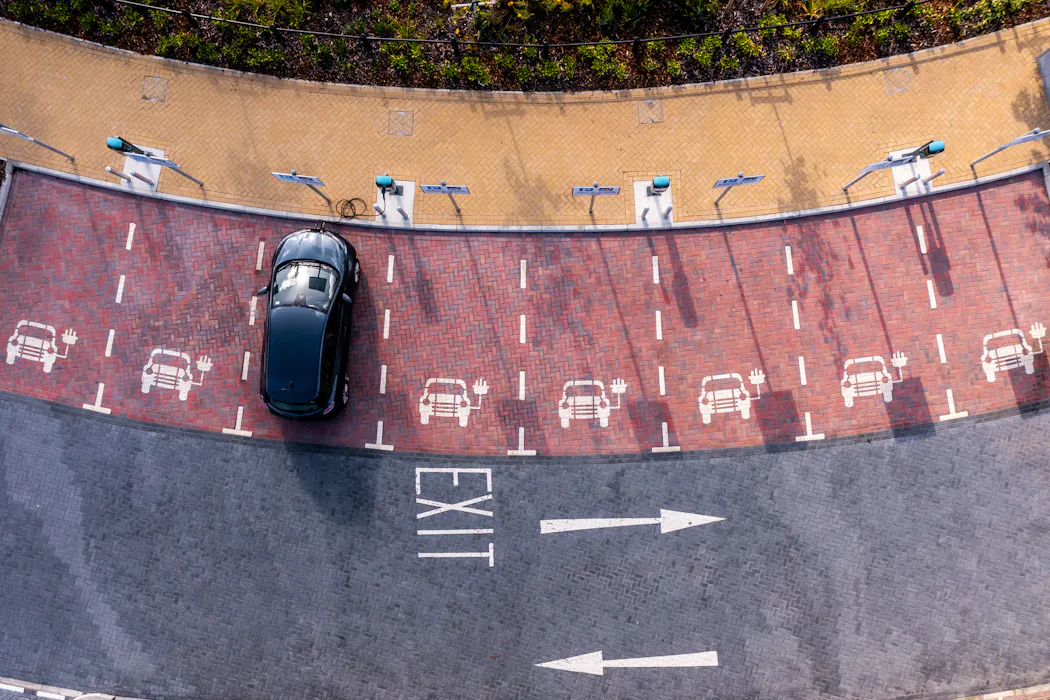
Electric vehicles (EVs) seem to be popping up everywhere.
In the first half of 2026, sales of battery-powered EVs nearly tripled, and July’s figures suggest this trend will continue.
However, our cumulative research reveals Australia’s charging network may soon fail to keep up with the booming EV market.
Behind the boom
Over the past six months, sales of battery-powered EVs have surged to represent 23.4% of the new car market, up from 8.4% in January. And this growth is showing no signs of slowing.
Combined data from the Electric Vehicle Council and the Federal Chamber of Automotive Industries shows more than 108,000 new cars hit the road in July, of which more than a fifth were battery-powered EVs.
Major EV manufacturers Tesla and Polestar alone delivered more than four times as many new vehicles in July as they did in the same month last year. BYD, which sells EVs and hybrid cars, is now Australia’s second best-selling brand overall behind Toyota. It upped its new car sales by 70.5% year-on-year.
Until recently, Australia appeared to be a laggard in the uptake of EVs. This is despite a large and growing appetite for home electrification technology, including rooftop solar and home batteries.
This year, EVs seem to have become just as popular. In July, sales of petrol and diesel cars fell sharply as fuel prices climbed. Meanwhile, plug-in hybrid sales surged by 157%. This suggests new segments of the EV market are now opening up and attracting different types of customers.
Read more:
Fuel prices are driving more Australians to EVs – and secondhand cars are in high demand
Rapid rollout
Retailers and fuel companies are racing to meet this unprecedented demand for EVs with increasingly high-powered chargers.
Coles, in partnership with Evie Networks, is installing 200-kilowatt fast chargers at up to 30 supermarkets in Victoria and Queensland over the next two years.
Ampol has just switched on its first 400-kilowatt chargers as it aims to establish the country’s leading charging network by 2030. BP is building a 24-bay charging hub at Melbourne Airport, adding to the nearly 300 bays it has installed nationally since 2022.
The National Roads and Motorists’ Association is expanding its highway charging network, building 35 new sites in 2025 after receiving nearly A$40 million in federal funding.
Soon, EV fast chargers may be a common sight at places like your local supermarket and servo.
Where the problem lies
Governments are quick to fund new chargers, but this money often disappears after the ribbon is cut.
Chargefox, Australia’s largest charging network, owns very little of the hardware it relies on. It’s a network of networks, bundling chargers owned by other charging networks, councils, businesses and energy companies into one app. This means EV drivers may struggle to know who is responsible for a flawed or broken charger.
Having one dominant charger operator creates other issues. One study found Chargefox controls 83% of Tasmania’s public chargers and 58% of those in Western Australia. In such a concentrated market, one company’s bad month rapidly becomes a state-wide outage.
In WA, the Royal Automobile Club quietly wound up its decade-old Electric Highway project last year. It established 16 charging locations from Monkey Mia to Esperance, and was one of the first networks of its kind in Australia.
The project is now in the hands of local councils, many of which lack the resources and skills to manage such complex infrastructure. Several councils have decommissioned broken units rather than repair them. Others have pulled out chargers altogether, creating complete gaps in the network.
Read more:
Blocked bays and failed handshakes: many public EV chargers are unusable – despite being ‘online’
Not just Australia
Other countries are trying to ensure their public charger rollout keeps pace with surging EV demand.
In the United States, federal standards apply only to chargers built with federal funding. Individual states, such as California and Hawaii, require any charger connecting to the grid to meet their own technical standards.
In the United Kingdom, the government mandates that all public rapid chargers have 99% uptime. Uptime is a measure of how often a charger is available and working. But operators are required to self-report their uptime figures, which are rarely tested by government or an independent body.
The European Union has stronger enforcement, requiring charger companies to share their uptime and payment data with authorities.
However, these approaches have failed to close the gap between reported uptime and what drivers actually experience.
A landmark study of San Francisco’s public chargers found only 73% worked when tested, compared to operator claims of 95% to 98% uptime. We observed the same pattern in our recent analysis of chargers funded by the Californian government.
Despite these challenges, most mature EV markets do have some kind of national strategy for EV charging infrastructure, delivered through local means.
Read more:
Australia is failing on electric vehicles. California shows it’s possible to pick up the pace
What we can do
We can strengthen Australia’s charging network by:
-
applying federal minimum operating standards, that currently require 98% uptime for chargers built with taxpayer dollars, to privately funded chargers
-
linking charger funding to performance rather than just installation, as the US does, so operators are incentivised to maintain reliability
-
ensuring networks in rural and remote regions are carefully planned and positioned along key highways
-
requiring charging companies and car manufacturers to disclose data, including how quickly cars charge, how often chargers fail and where, and which sites are charging hotspots to identify potential bottlenecks.
For now, Australia’s charging network is growing fast enough to meet the needs of EV owners. But that could soon change if we keep building new chargers while leaving existing ones to break down or simply disappear.

Scott Dwyer receives funding from the RACE for 2030 Cooperative Research Centre and the Australian Renewable Energy Agency.
Kai Li Lim does not work for, consult, own shares in or receive funding from any company or organisation that would benefit from this article, and has disclosed no relevant affiliations beyond their academic appointment.
Original source: https://analysis1.mil-osi.com/2026/08/20/australias-ev-sales-are-skyrocketing-our-charging-infrastructure-may-soon-struggle-to-keep-up/