

Source: The Conversation (Au and NZ)
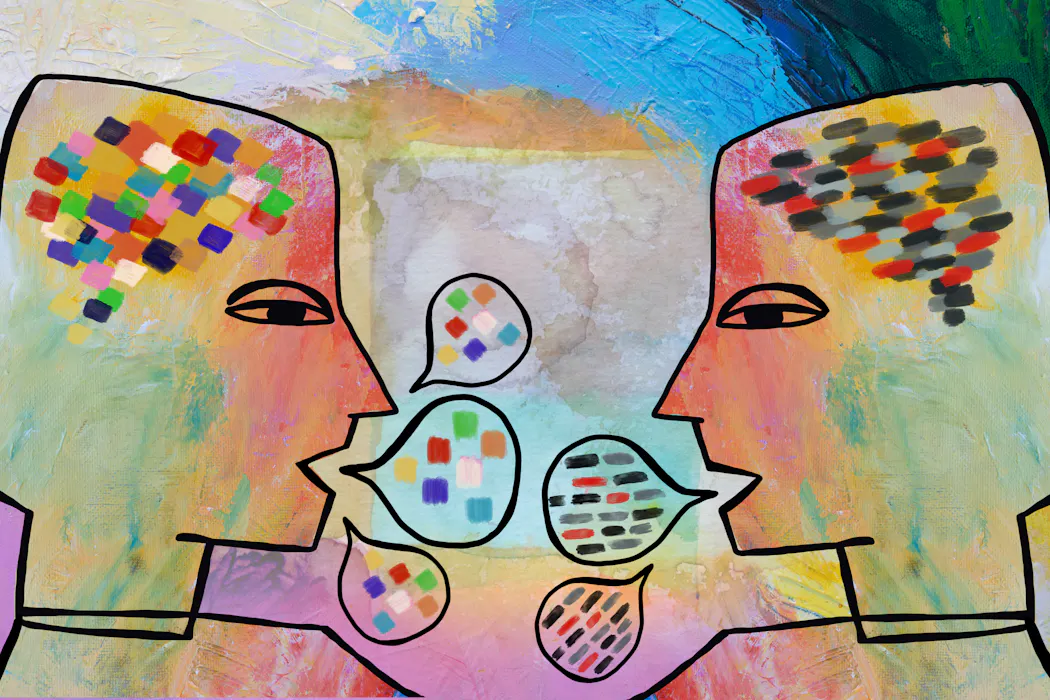
Mention psychotherapy and many people picture a familiar movie scene: someone lying on a couch, talking about their childhood, while a therapist sits behind them taking notes.
That image comes largely from psychoanalysis. But it doesn’t represent most psychotherapy today. Psychotherapy and psychoanalysis aren’t really competing treatments.
Psychotherapy is the broader term for a range of psychological treatments designed to help people change troubling thoughts, feelings, behaviours, or relationships. These include cognitive behavioural therapy, family therapy, and psychoanalysis, which played an important role in the field’s development.
Where did psychoanalysis come from?
Psychoanalysis developed from the work of Austrian neurologist Sigmund Freud in the late 19th and early 20th centuries.
Freud proposed that much of our mental life happens outside our conscious awareness. He believed early experiences and unconscious conflicts could shape how we feel and behave.
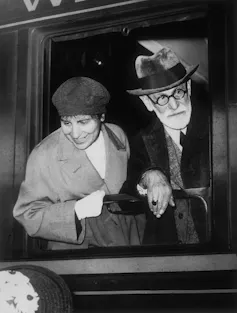
Hulton Deutsch/Getty
Psychoanalysis aimed to bring these influences into awareness. Patients were encouraged to say whatever came to mind, a technique known as free association, while the analyst helped them look for patterns and meanings. Dreams and the patient’s relationship with the analyst could also be explored.
Psychoanalysis also strongly influenced early psychotherapy with children. Freud famously worked with a five-year-old boy known as “Little Hans” for a phobia of horses. His daughter, Anna Freud, later became a pioneer of child psychoanalysis.
So, do you really lie on a couch?
In traditional psychoanalysis, quite possibly.
Traditional psychoanalysis is intensive. Patients may attend several sessions each week, often for years, typically lying on a couch with the analyst out of view.
In the early days of psychoanalysis, the analyst wasn’t necessarily silent. But rather than giving advice or teaching skills, they listened, asked questions, and offered interpretations intended to help the patient recognise patterns outside their awareness. Some psychoanalysts still practise this way.
But from the early 20th century, psychotherapy began to diversify. Behavioural therapies focused on learning and changing what people do. Later, cognitive therapies focused on changing patterns of thinking, while family therapies focused on interactions between people.
Meanwhile, modern psychodynamic therapy grew from psychoanalysis and retains some of its focus on unconscious processes and relationship patterns. But it is usually less intensive. Therapist and client generally sit face-to-face, meet less frequently, and the therapist may take a more active role.
What does psychotherapy look like today?
There’s no single answer because psychotherapy now includes many approaches. Many involve more than just talking.
A therapist might use carefully chosen questions to help someone examine a belief. For example, what evidence supports it? Is there another way of looking at the situation? They might then test that belief with a behavioural experiment in everyday life.
Someone who thinks, “If I speak at a meeting, I’ll make a fool of myself”, for example, might make a small contribution and observe how others respond – perhaps finding things don’t go as badly as they feared.
A therapist might help a person with depression plan activities that provide pleasure or a sense of achievement. Therapy may also involve practising new skills between sessions.
None of this involves mind-reading. Good psychotherapy should be collaborative: therapist and client agree on what they are trying to change and work together towards those goals.
What about children?
Psychotherapy doesn’t always involve an adult talking one-to-one with a therapist.
With children, the person doing much of the therapeutic work may sometimes be the parent.
Evidence-based parenting programs can help parents encourage positive behaviour, respond differently to problem behaviour and strengthen their relationship with their child. Other therapies involve both children and parents or use developmentally appropriate activities.
So, what happens in psychotherapy depends on who needs help and what problem they are experiencing.
But does psychotherapy work?
For many mental health problems, yes. But “psychotherapy” isn’t a single treatment. Asking whether psychotherapy works is a little like asking whether medicine works: which treatment, for which problem?
Some therapies have much stronger evidence for particular problems than others. The Australian Psychological Society’s Evidence-based Psychological Interventions review brings together research on psychological treatments for a range of mental health problems in adults, children, and adolescents.
So someone seeking help can ask not only, “Does therapy work?”, but “Which therapies have the best evidence for my problem?” They can also ask a psychologist what approach they use and how they’ll know if it’s working.
What about psychoanalysis? Research supports shorter psychodynamic therapies, which grew from the psychoanalytic tradition, for some mental health problems. But traditional, intensive psychoanalysis itself has been studied much less extensively.
So, what’s the difference?
The simplest answer is that psychotherapy is the umbrella, while psychoanalysis is one approach underneath it.
Psychoanalysis played a major role in psychotherapy’s history. But the field has changed enormously since Freud’s time.
Today, psychotherapy is unlikely to involve lying on a couch while someone silently analyses your unconscious mind. It’s much more likely to involve therapist and client agreeing on what needs to change and actively working together.

Trevor Mazzucchelli is a registered psychologist with the Psychology Board of Australia, with endorsement in clinical psychology, and is a member of the Australian Psychological Society and a Fellow of the APS College of Clinical Psychologists. He is a co-author of the Stepping Stones Triple P – Positive Parenting Program and a consultant to Triple P International. The Parenting and Family Support Centre receives funding from royalties generated by Triple P resources, which are developed and owned by The University of Queensland. Royalties are distributed to the University, its Faculty of Health and Behavioural Sciences, and contributing authors. Trevor Mazzucchelli does not hold shares in Triple P International but has received, and may receive in the future, royalties and consultancy fees. Triple P International had no involvement in this article. He has received research funding from the Australian Research Council and the National Health and Medical Research Council. He does not endorse any specific program, product or organisation in this article.
Original source: https://analysis1.mil-osi.com/2026/08/19/whats-the-difference-between-psychotherapy-and-psychoanalysis/