

Source: The Conversation – Canada
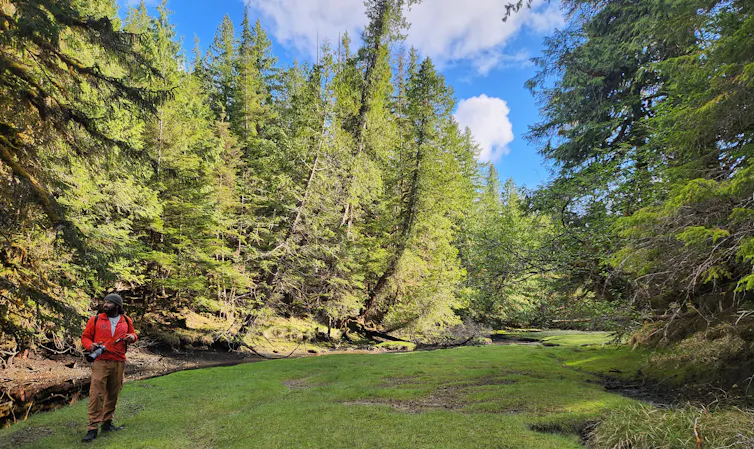
Scrambling through dense salal in the dark, weaving between the majestic western red cedars of northern Haida Gwaii, I could barely imagine where we were just days before — crossing Dixon Entrance off the coast in an open skiff, pushing head-on through ocean swells and salt spray.
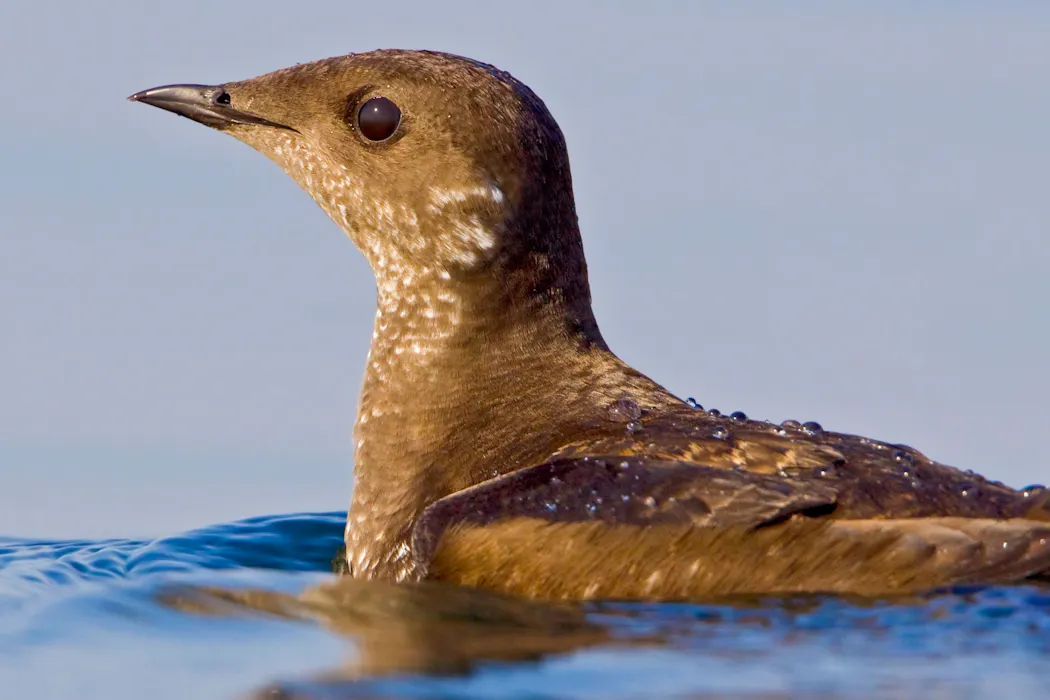
These were two vastly different worlds, connected by one strange little bird: the marbled murrelet.
My PhD research aims to better understand the connections between the marine and terrestrial environments that marbled murrelets depend on. Working in partnership with the Council of the Haida Nation and Environment and Climate Change Canada, I am combining GPS tracking, diet analysis, environmental DNA and nest searches to better understand where murrelets forage, what they eat and where they nest.
This summer, we discovered the first marbled murrelet nest recorded on Haida Gwaii in more than 30 years — the second one ever confirmed on the island.
A bird that transforms
About the size of a robin, the marbled murrelet seems almost ordinary at first glance. Look a little closer, though, and you realize everything about this bird is built to disappear.
During the breeding season, its feathers become a rich forest palette of chocolate brown, cinnamon, buff and black — the marbled pattern that gives the species its name. In winter, that same bird transforms. Its warm brown feathers are replaced with crisp black-and-white plumage, perfectly suited to a life on the open ocean.
Bobbing among whitecaps and rolling swells, the bird becomes just another moment of light and shadow on the water.
Commuting from land to sea
Unlike almost every other seabird, marbled murrelets don’t nest on cliffs or rocky islands. Instead, each spring they leave the ocean behind and fly inland (sometimes more than 80 kilometres) to ancient forests where they each lay a single egg on broad, moss-covered branches high in the canopy.
Their flights are timed for the dim light of dawn and dusk, when they can fly undetected. To anyone listening in these early hours, the unmistakable sound of their “keer” calls fill the air.
Later, they will commute daily from land to sea, bringing foraged fish into the forest to feed their single chick.
A threatened species
Over the past century, the loss of old-growth forests across British Columbia has dramatically reduced available nesting habitat. At the same time, changing ocean conditions have negatively affected the small forage fish that murrelets depend on.
Facing pressures in both the marine and terrestrial environments, the marbled murrelet is listed as threatened under Canada’s Species at Risk Act. Understanding how these two environments are connected has become one of the biggest questions in marbled murrelet conservation.
Searching for nests
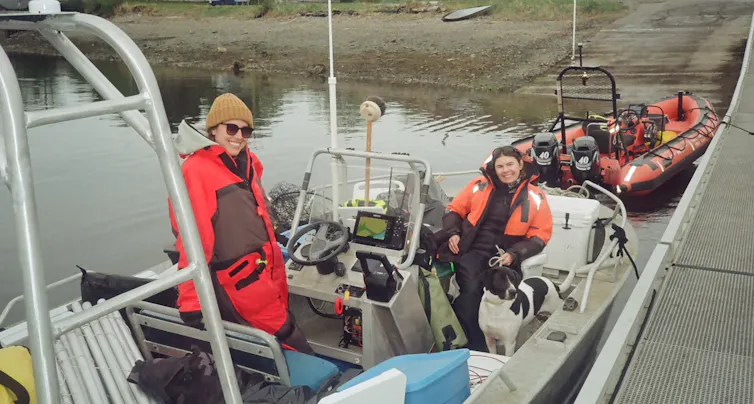
The search for a marbled murrelet nest begins on the ocean. In darkness, our team heads out in a small inflatable boat, using spotlights to locate birds resting on the water.
We capture these birds with long-handled dip nets, then briefly examine each one before attaching a lightweight GPS tag to the feathers on its back using waterproof tape. The tag is lightweight and designed to fall off naturally when the bird moults its feathers.
Each morning, we download the GPS locations and watch the birds’ movements unfold. Most of the locations are at sea, revealing where murrelets forage, rest and travel throughout the day.
By combining these tracks with measurements of ocean conditions and information about diet from fecal and water samples, we can identify the types of marine habitat the birds prefer and better understand how changes in the ocean may influence their behaviour.

When a bird flies inland, though, the focus shifts. Inland locations can provide the first clues to where a murrelet may be nesting. During the day, we search for trees with the characteristics the birds are known to prefer — large, moss-covered branches, open flight paths through the canopy and suitable nesting platforms.
Once the most promising trees have been identified, we mark viewing locations and return to camp for a few hours of sleep.
Flying before dawn
Long before sunrise, we hike back, aiming to arrive at least an hour before dawn and wait. If we’re fortunate, the adult bird will silently leave its nest and fly back toward the ocean, revealing a location that may have remained hidden for many years.

(Rebecca Golat)
This year, we deployed GPS tags on 10 marbled murrelets in Néedan Gawée (Naden Harbour), northern Haida Gwaii. Three birds repeatedly returned to locations inland, forming clusters of GPS points that suggested they may be nesting.
After unsuccessful dawn surveys at two sites, we turned our attention to the third, most distant, location — more than 20 kilometres inland from where the bird had been captured in Naden Harbour.
After only a few hours of sleep, our alarms sounded at 2 a.m., and we began hiking through the darkness toward the site. Somewhere along the way, we took a wrong turn. Suddenly, every minute mattered.
We found ourselves jogging through old-growth forest, scrambling across bogs, weaving through dense salal and second-growth, hoping to reach our viewing location before first light.
We arrived only minutes before dawn, soaked in sweat and breathing hard, and looking up into the canopy. Finally, we saw a shadowy figure fly out of the trees. We’d found the first nest recorded in Haida Gwaii in over 30 years.

Sonya Pastran receives funding from Environment and Climate Change Canada, BC Conservation & Biodiversity Awards
Foundation, the Werner and Hildegard Hesse Graduate Research Award, the Pacific Seabird Group, the Society of Canadian Ornithologists and the Habitat Conservation Trust Foundation.
Original source: https://analysis1.mil-osi.com/2026/08/18/how-we-found-haida-gwaiis-first-marbled-murrelet-nest-in-more-than-30-years/