

Source: The Conversation – UK
Governments have always had to strike a balance between actions that are unpopular but thought to be necessary, and laws and policies that win them support from the public. In the UK, the new prime minister Andy Burnham has set out to grab the news agenda with a string of genuinely popular announcements.
Back in the middle ages, unpopular governments did not need to worry about the ballot box – but they did often face popular uprisings. The most famous of these was the 1381 Peasants’ Revolt in England – a serious of riots across the country against the corruption of government and local landlords. This is the most studied revolt of the middle ages, but there were many other uprisings across medieval Europe.
But one country where these uprisings were uncommon was Scotland. In my book, Protest, Resistance and Popular Politics in Late Medieval Scotland, I investigated why this might have been the case. One reason was the relative alertness of the Scottish state when it came to passing laws that eased the consequences of war, famine and plague for the people.
This is not to say that Scotland was anything close to a democracy, nor that Scottish kings pursued only those policies that would make them popular.
In the 15th century for example, both football and golf were banned in Scotland to ensure that people practised archery instead. The law was intended to ensure that the kingdom could be well defended against invasion. Yet, the banning of popular pastimes would not have gone down well, and the fact that these laws were passed four times that century suggests that they were repeatedly ignored.
Responding to the people’s struggles
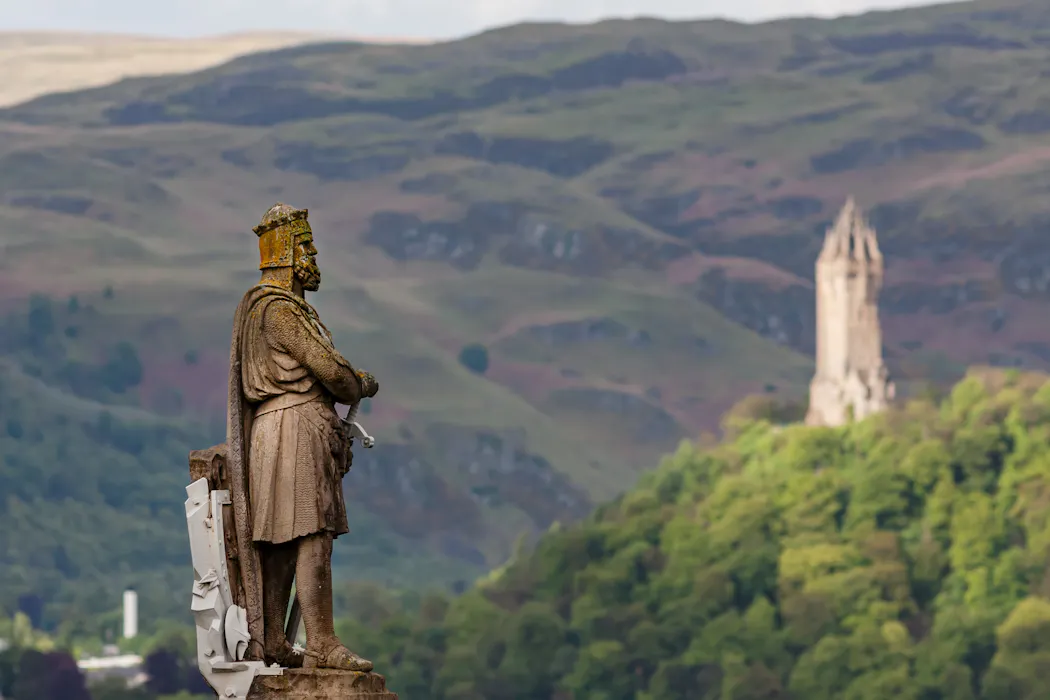
But a parliament held in 1318, during the reign of Robert the Bruce, shows how medieval kings could use laws to address social tensions. The parliament was held at the end of the Great European famine and after Scotland had experienced around three decades of bloody conflict with England in the first Scottish war of independence. It also followed a failed Scottish invasion of Ireland, in which the king’s brother, Edward Bruce, was killed.
As such, the king was not popular – and people may even have been questioning his right to rule. After all, Robert had seized the crown by force in 1306. Therefore, it was decreed that those who sowed discord between the king and his subjects by spreading “tales or rumours” would be arrested.
Yet despite clamping down on everyday speech in such an authoritarian way, the king was also keen to appeal to his poorest subjects. Bruce commanded that justice should be done as much to “paupers as to wealthy people”.
Several acts addressed the worsening socio-economic conditions of the time. One stated that soldiers who committed “murder, rape or theft” were to be tried by the justiciar, whose courts were the most important in Scotland, with only parliament being more powerful. Another forced lords who were joining the king’s army to ensure they brought enough food for their men, or pay them market rates for provisions.
Plague and famine hit Scotland, and much of Europe, throughout the 14th and 15th centuries. In 1439, a combination of disease along with poor harvests led to a devastating famine in the country. The cost of staples such as corn and oats appear to have spiked in that decade.
This would have been fresh in the memory of the young king, James II, in 1450 when an act sought to prevent merchants buying up essentials in order to ramp up prices. For those trying to profit from others’ misfortune in this way, their goods could be forfeited to the crown. This was soon after James reached adulthood and was able to run the kingdom by himself – the act meant he was seen to be tackling hardship by supporting ordinary people against profiteering.

imageBROKER.com/Shutterstock
There were also instances when kings passed laws to benefit farmers. The most famous of these laws mandated the hunting of wolves and were passed in 1428 and 1458. Each baron was to lead a wolf hunt at the time when cubs were born.
The intention was to hunt the animals to extinction because they attacked livestock and were viewed as a danger. But it seems the wolves held out – it’s thought they remained in Scotland until the late 17th century. But with wolves widely viewed as a menace, if nothing else these laws showed the people that kings could recognise a commonly held problem that affected the lives of their subjects.
Read more:
Farmers told me what they really think about reintroducing lynx and wolves to Britain and Ireland
Although they did not have to answer to the people in elections, medieval kings needed to court public opinion because, fundamentally, it made their lives easier. Protest and unrest could cause upheavals that kings wanted to avoid.
In Scotland, kings passed laws that had something of a “populist” appeal. They tried, though did not always succeed, to ensure that nobles behaved themselves and worked for the common good. Pressure of war, plagues, famine and economic hardship – if not addressed – could fester and escalate into large-scale uprisings. Some astute lawmaking, even if those laws were mostly statements of aspiration, combined with a bit of luck, might mean that medieval Scottish kings avoided mass rioting.

Gordon McKelvie is a member of the Labour Party
Original source: https://analysis1.mil-osi.com/2026/08/11/how-medieval-scottish-kings-kept-unrest-at-bay-with-populist-policies/