

Source: The Conversation (Au and NZ)
Many people are blissfully unaware the world’s frogs and amphibians are fighting their own deadly pandemic. In fact, this fungal disease – chytridiomycosis, or chytrid for short – is the worst wildlife disease on record.
The chytrid fungus has caused the global extinction of 90 amphibian species and affected nearly 30% of all globally threatened amphibians.
Scientists have responded with ingenious and novel ways to help frogs survive, such as frog saunas – where amphibians can warm up and bake off their infections – and captive breeding programs.
But our new research suggests some of these may come at a cost to a core aspect of frog survival: their ability to reproduce.
Read more:
Our ‘frog saunas’ could help save endangered species from the devastating chytrid fungus
Frogs in the front line
Frogs are more robust than we often give them credit for, having survived several previous mass extinctions. But some scientists argue amphibians are now on the front line of a sixth mass extinction.
Under the combined pressures of disease, habitat destruction and rising temperatures, we are now seeing an alarming decline in frog species. If we want frog populations to recover in the long term, we need to ensure not only their survival, but their reproductive health.
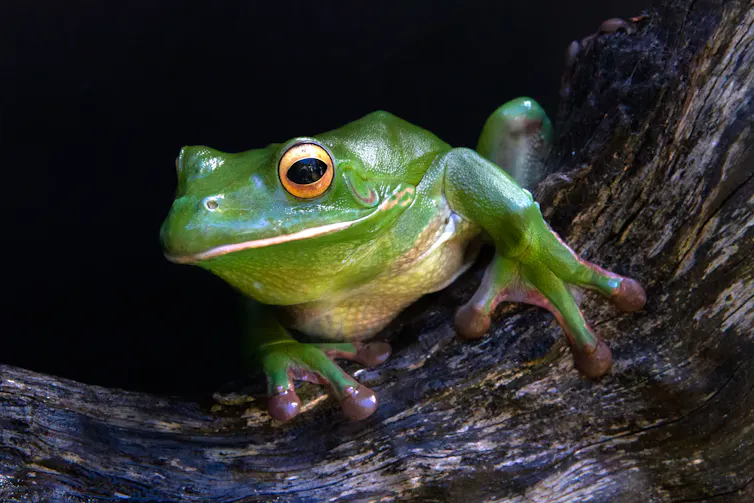
Australia is home to roughly 250 frog species, many of which are found nowhere else on Earth. They are also among the worst affected globally by chytrid, which is thought to have caused seven frog extinctions. A further 36 species are under threat.
Marianne Purdie
What we studied
The chytrid fungus and many frogs flourish in cool, moist habitats. So scientists have experimented with making the environment inhospitable to chytrid without harming frogs.
Deliberately exposing frogs to chytrid and following this with heat therapy in “frog saunas” offers a protective effect in some frogs. This approach was tested on green and golden bell frogs and found to act like a vaccination, making it more likely they would survive reinfection. These interventions are vital for helping amphibians survive, and should continue to be developed and used.
But survival is not the same as recovery. Our new research*link to article when published* found both being infected with the fungus and the use of heat therapy may reduce frog sperm quality. And this could affect their reproductive ability long after they recover. Our findings suggest we need to carefully study what happens after interventions are used.
Successful treatment but unexpected side-effects
The green and golden bell frog, Ranoidea aurea, is one of the species hit hardest by chytrid. It has disappeared from more than 90% of its former range in southeastern Australia.
We examined the effects of chytrid infection and heat treatment on sperm quality in male green and golden bell frogs. We found frogs with moderate infections produced higher concentrations of sperm than uninfected frogs, which may reflect a phenomenon known as “terminal investment”.
This occurs when animals facing a threat to their survival respond by increasing their reproductive effort, in an attempt to pass on their genes before it’s too late. Similar responses have been observed in other amphibian species affected by chytrid, but responses to chytrid can vary.
Some frogs may increase sperm numbers, calling effort (to attract mates) or breeding displays, while in others there has been no observed effect to these traits. Research in this area is still ongoing, and trends can be hard to identify because we don’t know how one reproductive trait may correlate with another – for example, an increase in calling effort may not mean there are increased sperm numbers.
Interestingly, in our study, frogs with the worst infections did not have higher sperm counts. Instead, they had poorer sperm quality, particularly reduced sperm movement, which is essential for fertilisation. Frogs with only moderate infections had higher sperm counts, but lower sperm movement. We believe these findings indicate more energy being directed to mounting an immune response as infection progresses.
Frogs that underwent heat treatment to clear the fungal infection also showed substantial declines in sperm concentration, which persisted for months. While this sperm movement recovered over time, sperm numbers remained unusually low six months later.
So while heat treatment successfully eliminated the disease, the treatment itself appeared to impose a reproductive cost. This hidden cost could be missed if we consider survival from disease as the only indicator of success.

Ken Griffiths
Does this mean no more frog saunas?
We are definitely not saying conservationists should abandon heat treatments or other disease management strategies. The evidence overwhelmingly shows these tools are valuable and can help save frogs from a disease that has devastated amphibian populations worldwide.
Instead, our findings suggest conservation programs should broaden what success looks like. If a frog survives infection but its reproductive capacity is reduced, conservation managers may need to account for this when they plan breeding programs, translocations and population recovery efforts.
Monitoring the reproductive health of frogs alongside their disease status could help identify any hidden long-term consequences before they affect population growth. Encouragingly, researchers overseas and in Australia are already exploring a diverse range of approaches. These include assisted reproductive technologies, captive breeding and genetic biobanking.
Our study highlights how solutions can sometimes have unexpected trade-offs. Understanding this is critical if we want conservation efforts to keep frogs alive today, and ensure thriving populations for generations to come.

The authors do not work for, consult, own shares in or receive funding from any company or organisation that would benefit from this article, and have disclosed no relevant affiliations beyond their academic appointment.
Original source: https://analysis1.mil-osi.com/2026/08/04/we-can-help-frogs-beat-a-deadly-disease-but-can-they-still-reproduce/