

Source: The Conversation (Au and NZ)
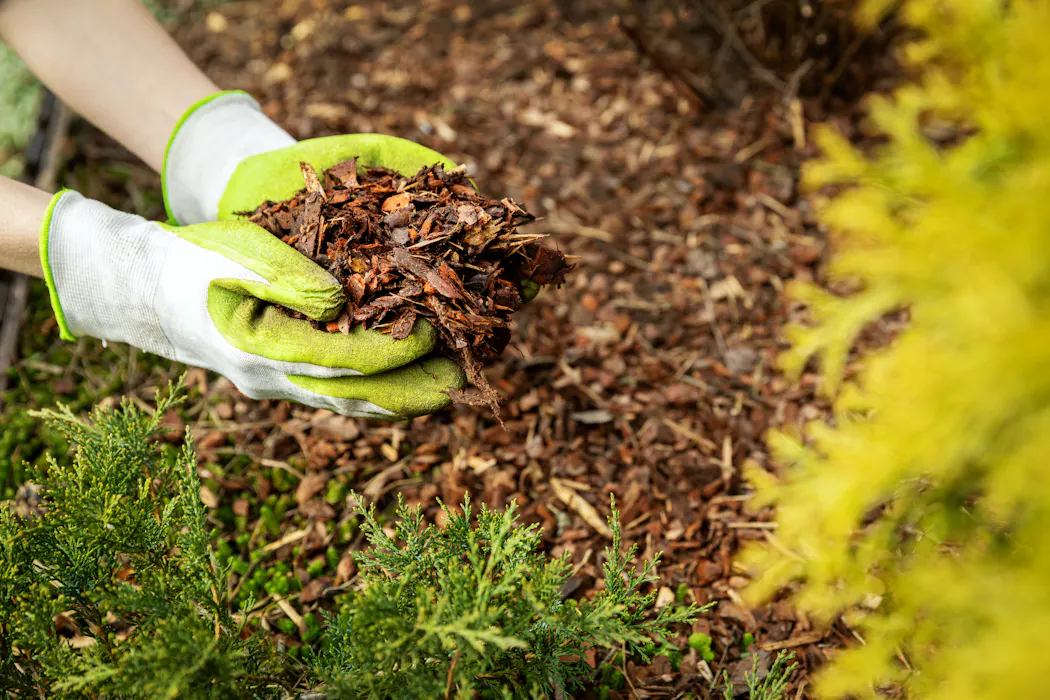
I love my garden mulch and I love the way birds forage in it.
I love the mess this causes, and I love periodically using my broom and rake to return some order to things. To me, this meditative, cyclical interaction with nature is at the heart of gardening.
However, some of us want a very neat, formal garden and feel untidy mulch out of place will not do. For some, those pesky birds that turn over the mulch are more curse than blessing.
There’s a product on the market to meet such needs: mulch glue, sometimes also known as landscape glue. This is essentially a glue you can spray onto mulch to keep it in place.
So, what do you need to know before using it?
The magic of mulch
Good mulch works wonders. It can:
- improve soil and facilitate plant growth
- aerate soil and keep it moist
- deliver vital organic matter and nutrients to soil, benefiting microbiota.
There are many different types of organic mulch, including, pea straw, sugarcane, pine bark, softwood chips, hardwood chips and various mixtures. Inorganic mulches, such as pebbles, can help reduce weeds, slow down soil surface water evaporation and even provide habitat for a few small invertebrates.
Whatever you use, mulch works best when air, water, fungi, bacteria and insects can work their way through it. Your garden, after all, is a living thing.
Mulch glue is a non-toxic water based adhesive made from either acrylic or urethane polymers. It is sprayed over mulch to keep it in place.
The glue allows water and air to penetrate into the soil. But – depending on how much you use – it might limit birds turning over and foraging in mulch.
This is a shame because bird foraging helps aerate soils and gardens, which is a boon for soil micro-oroganisms and insects. Birds help by adding manure to gardens, which gets worked in among other organic matter when birds forage.
Landscape glues are UV-light stable so persist for a long time; some people have flagged concerns that as they degrade, plastic particles can enter waterways and drains.
While studies on mulch glue are scarce, there are concerns it might affect worms and other small soil organisms indirectly by slowing mulch decomposition.
Embracing the chaos
Overall, there’s very little peer-reviewed research on mulch glue.
It can be useful in some contexts. In some cases, an initial application on sloped sites may be beneficial, allowing mulch to settle. And it might be helpful for older people or those with limited mobility who can’t always be returning mulch to its original spot.
That said, there’s a chance it could reduce the ability of birds to turn over mulch, and act as environmental engineers. It may inhibit the activities of worms, fungi and insects that contribute to soil structure and fertility. The movement of material around your garden – whether that’s via birds, rain or wind – is part of a natural and positive process.
It’s also worth thinking about the fact that mulch glues (and related products such as mulch dyes) come at an environmental cost. Their manufacture, packaging and transport takes energy and resources, so their use must be justified.
In the longer term, I reckon it’s best just to let the birds forage in your mulch – and embrace a little bit of chaos in the garden.

Greg Moore is on the Board of Sustainable Gardening Australia.
Original source: https://analysis1.mil-osi.com/2026/08/02/birds-messing-up-your-garden-mulch-why-id-think-twice-before-reaching-for-the-mulch-glue/