

Source: The Conversation – USA (3)
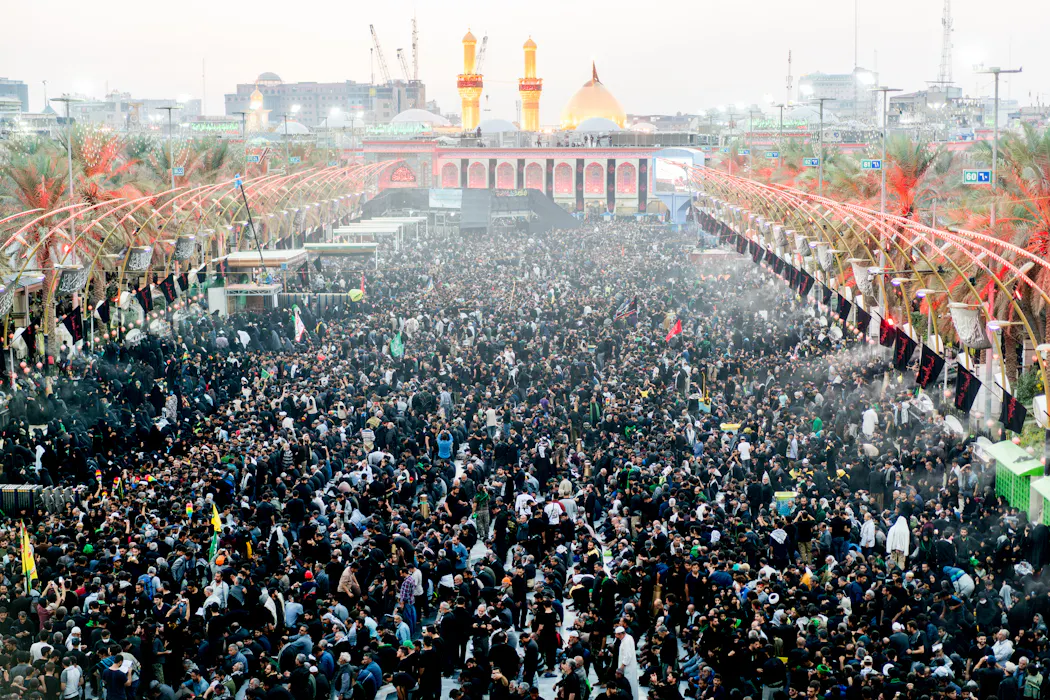
Every year, millions of pilgrims walk from the deserts of southern Iraq to the holy city of Karbala for Arbaeen, one of the largest annual pilgrimages in the world. In 2026, pilgrims will converge on Karbala on Aug. 5.
Arbaeen falls 40 days after Ashura, which commemorates the killing of Husayn ibn Ali, a grandson of the Prophet Muhammad, in 680 C.E. It marks the end of the mourning period that begins during the Islamic month of Muharram.
As a scholar of religion and politics who studies Shiite communities across the Indian Ocean world, I find that few rituals reveal as much about Shiite Islam as Arbaeen: its theology of sacrifice, its focus on injustice and the way in which it brings millions of people together.
A death that shaped a tradition
To understand Arbaeen, one has to return to the plains of Karbala in the year 680. After the death of Ali – Muhammad’s cousin and son-in-law – and then Ali’s elder son Hasan, the caliphate passed to the Umayyad ruler Yazid. The Umayyads were the first hereditary Muslim empire that ruled after the death of Muhammad in 632.
Husayn, the prophet’s grandson, refused to recognize Yazid’s legitimacy because he believed Yazid was not morally fit to lead the community of believers.
In 680, Husayn set out with a small band of family and followers and was surrounded by a far larger army near Karbala and killed alongside some 70 companions. The women and children of his household were taken captive and marched to the Umayyad capital in Damascus, in present-day Syria.
For Shiite Muslims, this was not merely a political defeat but a sacrifice to preserve the true faith. In confronting the army of the second Umayyad ruler of the dynasty, Husayn opposed a rule viewed as unjust and un-Islamic.
The remembrance of Husayn’s martyrdom reminds Shiites about the teachings of the prophet and his family. To them, it symbolizes the enduring struggle between good and evil and serves as a reminder to uphold a moral code despite what the powerful say and do.
Following the battle of Karbala, the survivors, who had been held captive in Damascus, stopped at Husayn’s grave. They were joined by a disciple of the prophet, Jabir ibn Abdullah al-Ansari, believed to be the first pilgrim to visit the grave.
Arbaeen commemorates that visit and marks the end of the period of mourning. Symbolically, the death of Husayn represents the shattering of the world, and Arbaeen restores it.
The walk of Karbala
Today, the best-known route runs some 48 miles — about 78 kilometers — from Najaf, where Ali is buried, to Husayn’s shrine in Karbala, a walk of roughly three days. The road is lined with “mawakib”: tents and stations where volunteers offer pilgrims free food, tea, medical care and a place to sleep.

Murtadha Al-Sudani/Anadolu via Getty Images
I have visited Karbala during this sacred time. I found it remarkable that a country that has been through decades of conflict and instability could host millions of people with free food and drink for a week. It showed me how the story of Husayn’s sacrifice continues to inspire extraordinary hospitality in the direst of circumstances.
Recent years have drawn crowds estimated at more than 20 million, making Arbaeen, by many accounts, the largest annual gathering on the planet.
It was not always so visible. Under Saddam Hussein, public Shiite mourning was tightly restricted, and the Arbaeen walk was effectively banned during the years of his rule (1979-2003). Saddam, a Sunni Muslim, suppressed many minority religious and ethnic communities. Only after the U.S.-led invasion of Iraq in 2003 could the pilgrimage resume openly, and it quickly grew to attract millions of pilgrims from around the world.
More than mourning
For most Shiites, Husayn’s martyrdom is more than a historical tragedy.
Husayn’s sacrifice has shaped not just religious devotion, but politics as well. Scholar Syed Akbar Hyder argues that it provides a model for resisting oppression, known as the Karbala paradigm. A concrete example of its political use came during the Iranian Revolution of 1979. Ayatollah Khomeini portrayed the shah as the tyrannical Yazid and himself as a Husayn-like figure returning from exile to save the Iranian people from injustice.
Husayn’s death has inspired Shiite communities around the world to create poetry, plays and rituals in local languages to meet different spiritual needs.
One of the best-known examples is “The Battle of Karbala,” a 19th-century Urdu epic written by Indian Shiite poet Mir Anees. He describes a scene in which Sakina, Husayn’s 4-year-old daughter, searches for her father and asks her uncle where Husayn is, unaware that her father has been killed in the battle. Shiites experience the grief as deeply personal and in the present.
Then little Sakina drew near, and softly cried:
“My uncle — where is he? Why does the throng press so?
Let me lay my blessing where his brow is dyed
with light; may God keep every harm below.
He lifts the standard high — let his renown be mine,
for he is Ali’s splendour, Ali’s living sign.”
For the millions who reach Karbala each Arbaeen, the meaning is at once ancient and immediate: to stand at the grave of a man killed 14 centuries ago, and to affirm that his refusal to submit to injustice still matters today.

Iqbal Akhtar does not work for, consult, own shares in or receive funding from any company or organization that would benefit from this article, and has disclosed no relevant affiliations beyond their academic appointment.