

Source: The Conversation – UK
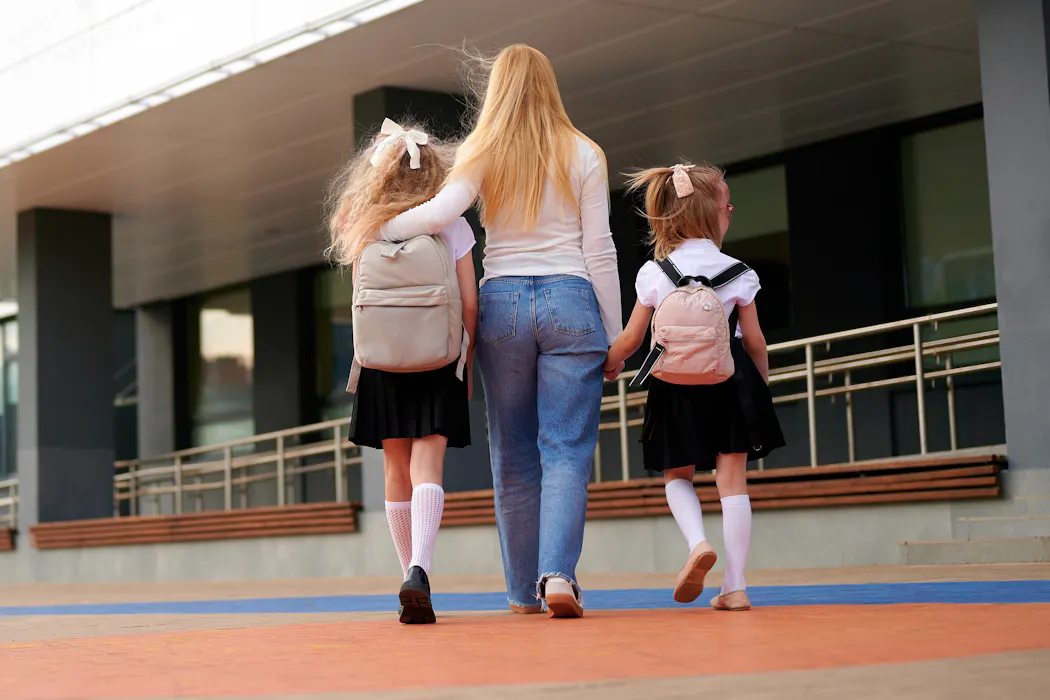
As another academic year ends, some schools will be closing their doors permanently due to falling numbers of children. In England, declining birth rates over the last decade have led to over 100 schools, predominantly in urban areas, permanently closing.
This relatively recent phenomenon is unprecedented in modern times. The last drop in pupil numbers, in the 2000s, was addressed through increased funding and smaller class sizes, not school closures.
The effect that school closures have on children, teachers and families is not well understood. Beyond the Department for Education’s assessment that sufficient school capacity exists nationally, the lived reality of this is often hidden.
We are carrying out research to explore the effect that these closures have on communities. Our analysis suggests they are disproportionately affecting communities that experience higher levels of deprivation.
We carried out interviews at a primary school facing closure – speaking to the headteacher, two school staff, the chair of governors and a parent governor, to find out how its closure would affect the community.
Primary schools, especially those serving areas with complex needs and disadvantages, serve a unique role in creating a sense of community. The chair of governors observed that without the school: “[Local] generations will be strangers to each other, because that’s one less place within the local community where they have the opportunity to get to know each other.”
Research has shown that this connection can become even more vital when schools are located in areas of disadvantage, where the school may provide far more than education. In our recent research, we heard how the school provided extensive support to extended families, including work with a food bank, uniform donations and subsidised breakfast club places.
The value of schools to the communities they serve is demonstrated by local parental campaigns launched to save local schools and featured in the media. However, others quietly close without much debate – especially if they are part of a multi-academy trust, which can close a school without formal public consultation.
For communities already suffering from multiple disadvantages, there are few avenues to challenge school closure decisions. Respondents told us how frustrated they felt at the lack of meaningful engagement, with the headteacher reflecting: “There is nothing that we said over that time that changed any part of the [closure] process.”
What happens when your school closes
Our research showed that the reallocation of children following closure was not carefully considered. Some children were sent to new schools without their friends or classmates.
We found that parents were left to seek out new school places through the normal allocation process run by the local authority, putting them under immense pressure not only to try to secure a space with friends, but also to find one that was accessible from their home.
This issue becomes far more complicated if new journeys include public transport and its associated costs. One parent reflected: “How am I going to work? How will I manage the new journey? You want to make the transition a positive process for them.”
These impacts on pupils – particularly year five students, who had to move to a new school for one year before moving again to secondary – need to be taken into account when school closures are considered.
Rawpixel.com/Shutterstock
Is it better for schools to keep going with smaller numbers of pupils?
Our findings do not suggest that schools should never close. There is, of course, a risk that a school operating with a small number of pupils may struggle to provide the staffing, resources and breadth of curriculum to support quality educational outcomes. Rather, we argue that it matters which schools close.
We would advocate for decision-making informed not only by enrolment figures and financial health, but also by careful consideration of the communities served. This would include the levels of disadvantage, number of children with special educational needs and disabilities, ethnic and cultural diversity and the geographical context.
If these factors are overlooked, the danger is that school closures will become another aspect of education in which inequities are exacerbated.
There is an urgent need for more research to better understand the impact of school closures – and, indeed, the impact of keeping smaller schools open. While we are currently researching some closures this year, it remains difficult to fully understand this growing issue and its impact on disadvantaged children in particular, as the situation is moving quickly and the decision-making is sometimes opaque.
What we want to emphasise, however, is that this is an issue for wider society, not just the education sector. Neighbourhoods with schools are better connected, more vibrant and engaged with one another, and better able to help more vulnerable families.
Losing schools means losing more than just a building; it means losing a vital anchor institution that affects the whole community.

Alice Bradbury receives funding from the Helen Hamlyn Trust which funds the Helen Hamlyn Centre for Pedagogy at UCL. She has also received research funding from the Economic and Social Research Council. She is a member of the Labour Party and the Universities and College Union.
Eleanor Fagan is a member of the Labour Party.
Original source: https://analysis1.mil-osi.com/2026/07/28/falling-birth-rates-mean-schools-are-closing-affecting-whole-communities/