

Source: The Conversation (Au and NZ)
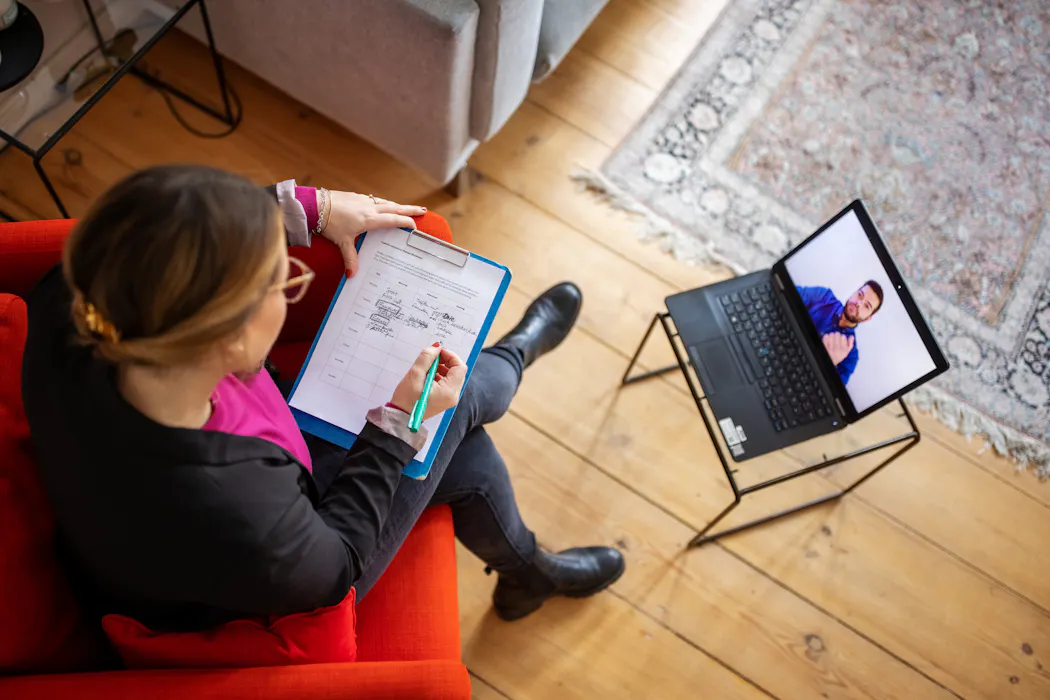
Seeing a psychiatrist via telehealth became easier from January 2022. That’s when Medicare-reimbursed telepsychiatry arrangements became permanent.
The idea was for these video and phone consultations to provide more flexible and sooner appointment times, without needing to travel.
But our new analysis shows what happened next.
We show how telepsychiatry became dominated by consultations for stimulant prescriptions since 2022. These were mostly for people with attention-deficit hyperactivity disorder or ADHD.
Telepsychiatry for ADHD specifically did increase access for people living in rural and remote areas. But it was more likely to be provided by psychiatrists living in more affluent major towns and cities.
These types of ADHD telepsychiatry appointments are also associated with greater out-of-pocket costs than the equivalent face-to-face appointments.
A three-fold jump in ADHD scripts
We examined nearly 4 million Medicare Benefits Schedule records of psychiatric consultations between 2017 and 2023. We also looked at the relevant Pharmaceutical Benefits Schedule prescription records arising from these consults.
Before COVID, our study showed less than one in 20 psychiatry consultations were linked to an ADHD prescription, and less than one in 50 were conducted by video.
By 2022, the number of ADHD-associated prescriptions increased almost three-fold from 4.3% to 11.8%. About one in four video psychiatry consults were linked to stimulant prescriptions.
Prescriptions for other psychiatric conditions linked to video consultations barely shifted over the same period, and in some cases fell.
This spike in ADHD scripts via telehealth isn’t simply because more people are being diagnosed with ADHD overall, although that’s also true. Australian Institute of Health and Welfare figures show ADHD medication dispensing rose roughly eleven-fold between 2004–05 and 2023–24.
We found the growth in psychiatric appointments created by telehealth was largely taken up with ADHD assessments. In particular, these are the kind of appointments that end with a new prescription rather than ongoing follow-up care.
Who is prescribing and where?
One of our earlier papers shows how telepsychiatry helps alleviate psychiatrist shortages in rural areas.
So we initially expected ADHD prescribing via telepsychiatry to be concentrated among psychiatrists working in under-served, regional and remote areas – the patients telehealth was explicitly designed to reach.
However, the steepest rise in ADHD prescribing was provided by psychiatrists practising in Australia’s most socioeconomically advantaged postcodes. Almost half of all psychiatrists in our dataset were based in the wealthiest areas. This group accounted for the bulk of the increase in video ADHD prescriptions.
That matters because video ADHD consultations, on average, cost patients more out-of-pocket than an equivalent face-to-face appointment.
So the picture is less about telepsychiatry improving access and removing the cost barrier to care. It’s more about creating well-paid specialist services for people who can already afford it.
Why ADHD, specifically?
Interest in ADHD, and its diagnosis, has exploded for a number of reasons.
Social media has allowed more people to recognise their ADHD-like symptoms,
particularly adults who were never assessed as children.
Search terms such as “ADHD treatment” and “ADHD medication” climbed steadily across the study period. We found this online interest tracked closely with the rise in video prescribing of stimulants.
Others point to social media platforms, digital notifications, emails and algorithmic content taxing the brain, making it harder to focus for long periods. This “attention economy”, they argue, may also contribute to people thinking they have ADHD and seeking a diagnosis.
When services for ADHD dominate, others will miss out
None of this means the demand isn’t real, or the diagnoses are wrong. Drug treatment for ADHD has a strong evidence base and can be life-changing.
This shift was strongly associated with a higher proportion of female patients, whose ADHD has been historically under-recognised.
But these video ADHD consultations can be lucrative. They offer a way for psychiatrists to see more patients, faster. So a single “one-off” assessment of
30 minutes or longer that results in a script – the type we identified – is an attractive business model.
When ADHD comes to dominate Medicare funding for telehealth originally designed to broaden access to all psychiatric care, market access for people with other mental illnesses may be crowded out.
So yes, telepsychiatry is expanding access. But our study shows its model is focused on a single, lucrative, fast-growing diagnosis and prescription business.
What does this mean as GPs prepare to step in?
Until recently, only psychiatrists could diagnose and start ADHD medication for adults in most of Australia.
But in response to the difficulty accessing psychiatric consultations, state governments are moving to let GPs diagnose and prescribe for ADHD.
While this sounds sensible, we’d be concerned if similar issues we’ve flagged in telepsychiatry were seen in general practice. That is, an increase in commoditisation of ADHD care.

Jeffrey C.L. Looi is a private practice academic neuropsychiatrist who provides face-to-face consultations and telepsychiatry. He has been a private psychiatrist representative of the RANZCP, and is a former federal council psychiatrist representative, and Fellow of the Australian Medical Association. Views expressed in this article are his own, and not those of any organisation he is affiliated with.
Tarun Bastiampillai is on the board of Australian Medical Association SA and the Australian Society of Psychiatrists. His views expressed in this article are his own, and not those of any organisation he is affiliated with.
Luke Sy-Cherng Woon and Wai-Man Liu do not work for, consult, own shares in or receive funding from any company or organisation that would benefit from this article, and have disclosed no relevant affiliations beyond their academic appointment.
Original source: https://analysis1.mil-osi.com/2026/07/22/how-telehealth-is-fuelling-a-surge-in-adhd-scripts-in-a-business-model-that-benefits-the-rich/