

Source: The Conversation – UK
A dip in the sea can provide welcome relief after long stretches of hot weather – especially when the water is an inviting 20°C or more, as it has been recently across southern parts of the UK. But such sea temperatures are unusually warm, with UK waters being hit by the third major marine heatwave in four years.
Aside from obvious negative consequences for people, such as more drownings in open water, marine heatwaves can affect sea life of all sizes, from microscopic plankton to huge whales.
Around the world, such instances of unusually warm sea temperatures for five days or more have caused die-back of key species such as kelp, seagrass and corals.
Marine heatwaves have also caused death or changes to the life cycles of marine mammals and shellfish, as well as other species that depend on them, such as seabirds. They have caused species to migrate or shift their geographic range. These changes all disrupt ecosystems, with disastrous ramifications for oceanic food webs.
The UK’s first major marine heatwave, in June 2023, has been followed by another in May 2025 and the current heatwave in July 2026. Evidence of the impacts of these marine heatwaves is still quite limited, because some consequences can be subtle or take years to detect.
Extreme heat has been linked to harmful algal blooms around the UK. A surge in growth of microscopic algae develops when nutrients, warm temperatures, abundant sunlight and calm water combine to create ideal growing conditions.
Algal blooms can produce harmful toxins that accumulate in filter-feeding shellfish, causing severe illness or death in people who eat them. For that reason, the UK government works with food safety authorities to actively monitor marine biotoxins.
Warmer waters may have caused the influxes of octopus to the south coasts of Devon and Cornwall. Their predation on crab and lobster from pots has altered local fishery dynamics, with some fisheries now focusing on catching octopus.
A surge in jellyfish sightings has been suggested as another possible consequence of the latest marine heatwave. But early evidence suggests this may be due to more people at the beach reporting their observations.

AndreAnita/Shutterstock
Anecdotally, fishers have reported cold-water species such as cod shifting northward. Aside from affecting catch, such shifts may also affect seabird breeding and survival.
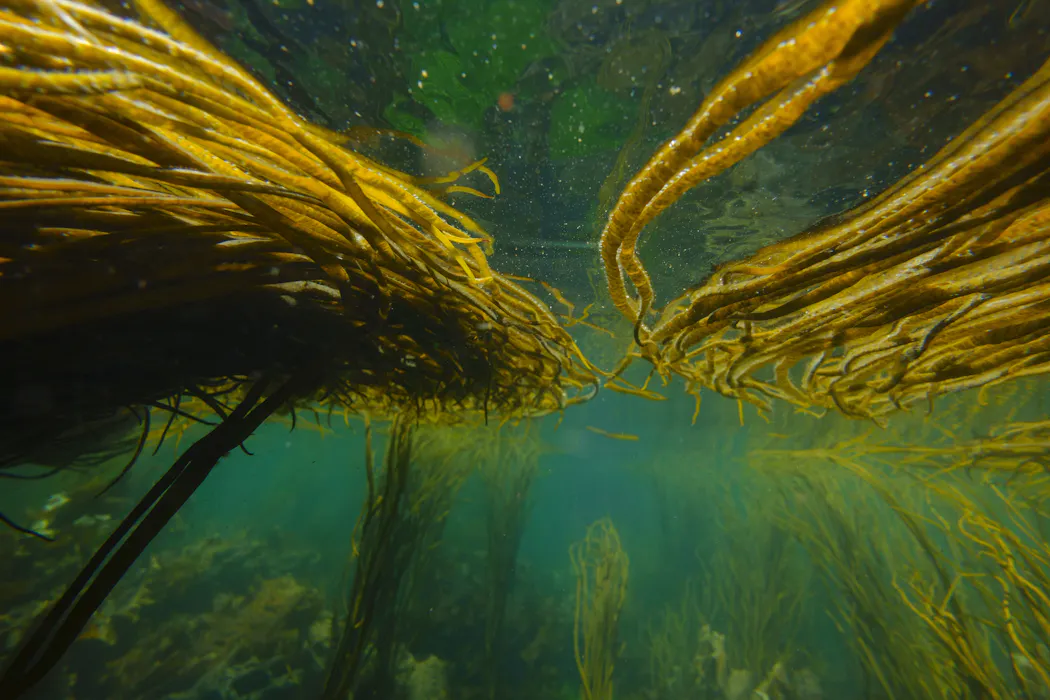
Seagrass beds and kelp forests have their own microclimates which can provide sanctuary from extreme heat. But they are also under threat from marine heatwaves, as warmer waters hinder their ability to provide refuge for marine species.
Because of changes to fisheries and ocean health, marine heatwaves have huge social and economic consequences.
In Western Australia, the consistently warm seas led to the coining of the term “marine heatwave” in 2011. This caused decimation of seagrass meadows, along with die-back of kelp, corals, fish, abalone, prawns and crabs. Some parts of that marine ecosystem took years to recover; other parts have never bounced back.
Forty questions
Now, the race is on to understand the knock-on effects of marine heatwaves and which marine species are most threatened.
Management interventions, such as harvest strategies or catch quotas, can protect breeding populations and young fish, helping to maintain healthy fish and shellfish numbers. The earlier these interventions are implemented, the better.

muratinan/Shutterstock
There is still so much that marine scientists need to understand about the effects of marine heatwaves. A diverse range of experts recently identified the 40 priority questions to advance understanding of the risks and opportunities of UK marine heatwaves. These questions centre on heatwaves’ effects on marine ecosystems, the services they underpin, the blue economy and society.
The UK’s 2023 and 2025 marine heatwaves did not occur during the month of August, when UK waters are at their seasonal warmest and added heat could tip conditions past critical thresholds.
Should the current marine heatwave continue into August, the consequences could be dire, giving these priority questions new urgency.

Jules Kajtar receives funding from UK Research and Innovation (UKRI).
Zoe Jacobs receives funding from UK Research & Innovation (UKRI).
Original source: https://analysis1.mil-osi.com/2026/07/17/in-hot-water-what-happens-to-marine-life-during-heatwaves/