

Source: Asia Pacific Report
By Margot Staunton of RNZ Pacific
Mahendra Chaudhry — a former Fiji prime minister removed from power and held hostage during the 2000 coup — wants George Speight to name those behind the racist takeover.
The 84-year-old Labour Party leader, who became Fiji’s first prime minister of Indian heritage in 1999, made the comment after Speight — the coup frontman — appeared before the Constitutional Review Commission last week.
Speight emerged into the political limelight in a formal suit and glasses, after spending 24 years in a maximum security jail for treason. The ex-convict has called on the perpetrators of the country’s past political upheavals to own up, saying “if you want redemption, you have to confess”.
- READ MORE: Former coup leader re-enters Fiji political debate with challenge to immunity and national identity
- Fiji will remain unstable while Indigenous people are economically sidelined, says ex-coup convict
- Other Fiji coup reports
However, Chaudhry told RNZ Pacific it is up to Speight to name the co-conspirators involved in the failed takeover.
“He has the answers, he knows, because he’s always been regarded as the frontman. There were people who were behind him but they remain unidentified to this day,” Chaudhry said.
“He has himself said that those who were associated with him are roaming around freely.”
Need for closure
The veteran politician said many Fijians still want to know who the masterminds were behind the coup.
“He [Speight] can help bring about closure to the whole episode because it still remains open, people don’t said know really who was behind the coup,” he said.
“Only he and [Josefa] Nata know, but they are hesitant, they are reluctant to name them.”
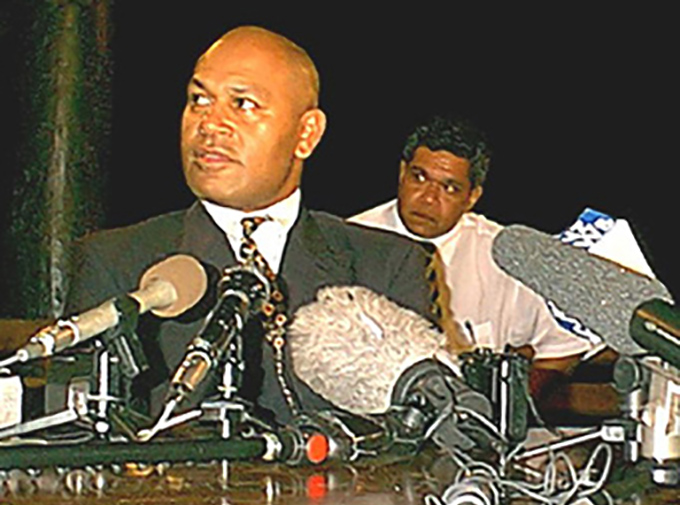
Nata, who was a public relations man at the time, became one of the faces of the coup along with Speight, and has admitted he played a key role as a negotiator.
Fiji has been rocked by four coups since gaining independence in 1970. The first two, in May and September 1987, were led by then-military lieutenant-colonel Sitiveni Rabuka, who is the current prime minister.
In 1999, Chaudhry was sworn in as the country’s first Indo-Fijian prime minister, but the Labour Party leader’s election stoked racial tension in Fiji.
A year later, Speight led rebel soldiers from the military’s Counter-Revolutionary Warfare Unit in an armed takeover of the then-coalition government. Chaudhry and his government were held hostage for 56 days.
He later pleaded guilty to treason and received the death penalty, which was later commuted to life imprisonment. However, he was granted a presidential pardon and released from prison on 19 September 2024.
‘Bigger issue at stake’
Nata, who also spent 24 years in jail for treason before his release in December 2023, has declined to name those who orchestrated the coup “for the sake of the families involved”.
However Chaudhry said there was a bigger issue at stake.
“The families would have supported these people when they were involved in the coup, whether they deserve sympathy I don’t know,” he said.
“It’s a question of the other people, they should be thinking about those who really suffered the pain and anguish of the coup.”
Chaudhry has his own views about who the perpetrators are but said no-one would believe him.
“We know that it was our parliamentary opposition who were involved in the coup because they wanted to get back into power,” Chaudhry said.
“So it was them and their associates, but I cannot name them.”
Rabuka did not serve as the leader of the opposition after the 1999 election, before he resigned to chair the country’s highest indigenous body, the Great Council of Chiefs (GCC).
“We know that the GCC, in meetings which were held subsequent to the coup, were in support of [the 2000 coup],” Chaudhry said.
Chaudhry defends Labour govt
Meanwhile, Speight told the commission during his submission that the events and policies that unfolded during the Chaudhry-led government’s first year in office ultimately led to his actions.
Responding on Wednesday, Chaudhry told RNZ Pacific that Speight’s explanation had no factual basis.
“It is clear that his opinion was not shared by the majority of Fiji citizens at the time,” he said.
He cited a Tebbutt-Times poll conducted in December 1999, which showed his approval rating at 62 percent and a disapproval rating of 15 percent.
He said an editorial in The Fiji Times at the time described the result as “a remarkable performance — and a ringing endorsement by the public of his performance as prime minister”, adding that it was the highest rating ever recorded in a Tebbutt-Times poll.
Chaudhry said that in just one year in office, the coalition government had introduced a series of socio-economic reforms, including removing VAT from a range of staple food items, while achieving a record 9.6 percent economic growth rate and strong business and investor confidence.
Race-fuelled coup
He argued that the campaign against his government in the lead-up to the coup was fuelled by racial politics rather than public dissatisfaction.
“It is well-recorded that the anti-Chaudhry agitation whipped up over the next few months [before the coup] came from ethno-nationalist propaganda and deliberate disinformation spread by the opposition and others, some of whom were driven by greed,” he said.
“Race was used as a weapon to fuel emotions and discredit the government.”
Chaudhry said this was why the Fiji Labour Party urged the commission during its submission to consider constitutional and legislative safeguards to prevent the exploitation of ethnicity for political gain.
Speight has never apologised to Chaudhry in person or asked him for forgiveness.
When asked if he was prepared to forgive Speight, Chaudhry replied: “I can’t answer that”.
This story was first published on

Original source: https://analysis1.mil-osi.com/2026/07/16/race-was-used-as-a-weapon-fiji-coup-frontman-urged-to-reveal-backers/