

Source: The Conversation (Au and NZ)
The first detection of the highly pathogenic avian influenza virus H5N1 in New Zealand marks an important milestone, but not an unexpected one.
Since the virus reached Australia last month, and as it continued its global spread, scientists and government agencies have been preparing for the possibility that it would eventually arrive here.
For now, this appears to be a single detection, but ongoing surveillance will be essential to determine whether additional cases emerge.
What Australia’s experience tells us
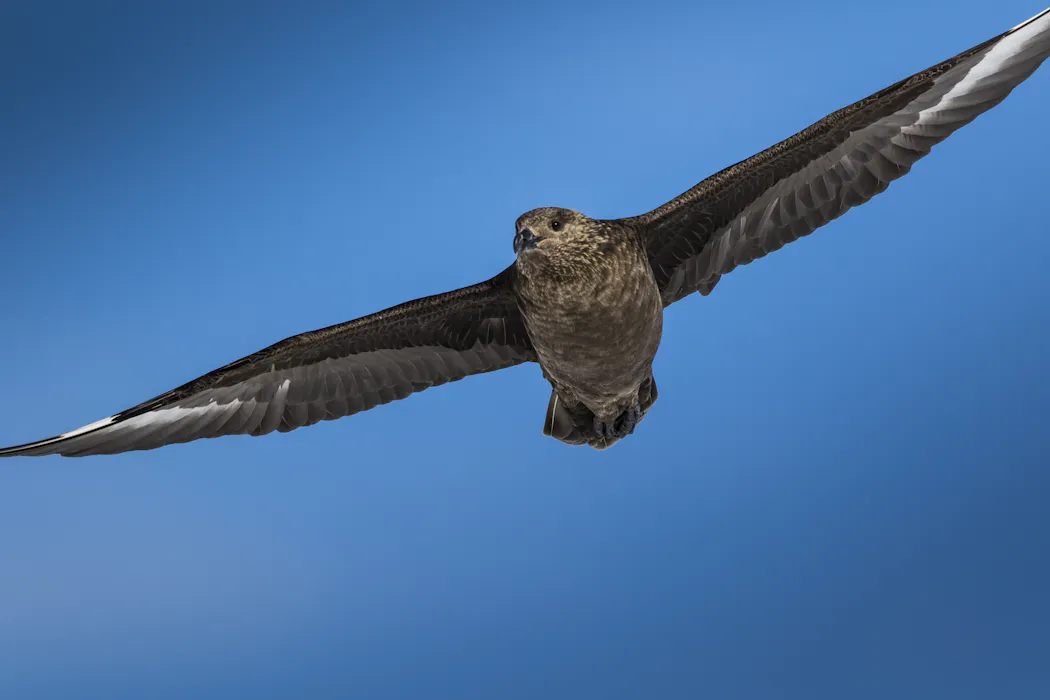
Australia provides an important indication of what New Zealand may face. H5N1 was detected in a brown skua in Western Australia less than four weeks ago. Further detections followed in Western Australia and South Australia, mainly in migratory seabirds, with a detection subsequently reported in New South Wales.
More recently, H5N1 was confirmed in a greater crested tern in South Australia, marking the first detection in a resident Australian seabird and therefore a possible indication of local transmission. So far, the Australian detections have involved individual seabirds rather than widespread wildlife mortality.
The virus has not been detected in poultry in Australia.
Susceptibility to infection and severe disease varies between species and individual incursions in solitary scavenging or predatory seabirds may not lead to widespread infection.
The risk of transmission is likely greatest in populations that live in large colonies, particularly at high density. These can be a source of transmission to other species that inhabit the same environments – for example, shorebirds and marine mammals such as seals and sea lions.
Proximity to backyard poultry and other livestock populations then becomes critical for onward transmission to domestic animals.
How prepared is New Zealand?
The advantage for New Zealand is that we are not facing this blindly.
The experiences of Australia and the rest of the world have provided several years of information about how H5N1 behaves, which species may be most susceptible and which surveillance and response approaches are most effective.
New Zealand has also spent recent years strengthening surveillance programmes, diagnostic capacity and collaboration between wildlife, agricultural and public health agencies. These systems will now be tested in practice.
No country can be completely prepared for a virus with such a broad host range and capacity to move over long distances in wild birds.
However, early detection, rapid information sharing and clear coordination between agencies will give New Zealand the best opportunity to understand and reduce the impacts of the virus.
Priorities for the response
The immediate focus should be on determining the scale and distribution of infection. This means increasing surveillance around the initial detection, testing potentially affected wildlife, and rapidly sharing information between laboratories, wildlife managers, veterinarians, public health authorities and affected communities.
Enhanced biosecurity measures and clear public communication will also be essential, building on preparedness plans developed by the Ministry for Primary Industries, the Department of Conservation, Health New Zealand and regional authorities.
The Department of Conservation has trialled a vaccine developed for poultry on five of our critically endangered taonga species of wild bird (takahē, kākāpō, black stilts, shore plovers and red-crowned kākāriki). The vaccine is safe and results in an immune response that is likely to be protective.
As a consequence, the Ministry for Primary Industries has approved the vaccine for use in these species, and this is now being rolled out on a larger scale. However, it requires two doses and can only be practically implemented in captive, managed populations or on offshore islands.
The devastating impact of the virus on marine mammals, such as the northern and southern elephant seals, reminds us of the vulnerability of New Zealand populations of seals and sea lions, including the pakake/New Zealand sea lion.
In the US, trials of a bird flu vaccine formulated for cattle have been carried out in the endangered Hawaiian monk seal. While the trials show promise, we are a long way from using these in marine mammals in Aotearoa.
Genomic sequencing will be particularly important. It can help identify where the virus likely originated, whether New Zealand has experienced one or several introductions, and whether transmission is occurring locally. It may also help link detections in New Zealand with outbreaks in Australia or elsewhere along regional bird-migration routes.
The arrival of H5N1 is unlikely to be the end of the story. International experience suggests further incursions may occur as migratory birds continue to move through the region.
The challenge therefore shifts from trying to prevent the virus from arriving to detecting new incursions quickly and managing their consequences.
The coming weeks will be important in establishing whether this is an isolated detection or the first sign of wider circulation. New Zealand has the benefit of advance warning and extensive international experience. The priority now is to put those lessons into action.

Jemma Geoghegan receives funding from the New Zealand Health Research Council, the Marsden Fund, a Rutherford Discovery Fellowship and New Zealand’s Infectious Diseases Research Platform.
Nigel French receives funding from the Ministry for Business, Innovation and Employment. He is affiliated with the University of Otago and the Infectious Diseases Research Platform.
Original source: https://analysis1.mil-osi.com/2026/07/16/bird-flu-has-reached-new-zealand-what-this-means-and-what-comes-next/