

Source: The Conversation – UK

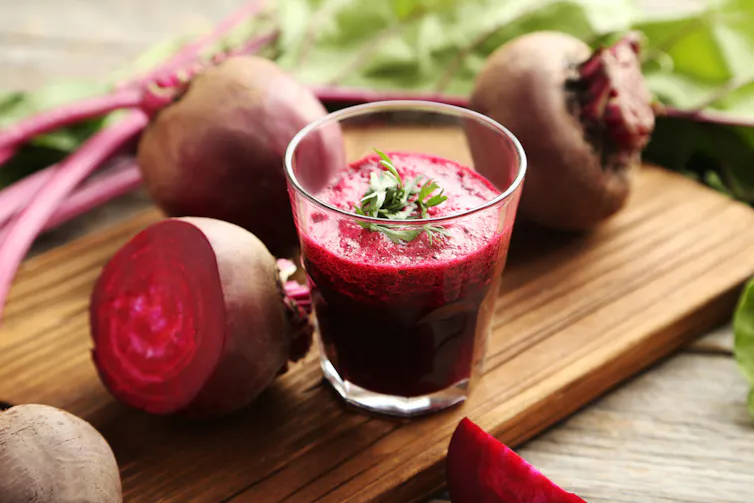
Evidence that beetroot juice can improve athletic performance has long been inconsistent. While some studies reported benefits, others found little or no effect. Now, a new study, combining results from 33 studies, provides the clearest evidence yet that it can enhance exercise performance.
The meta-analysis included data from more than 500 professional and recreational athletes. The results showed that consuming beetroot juice before exercise made a measurable difference to how well they were able to tolerate an intense session.
The greatest benefits were seen when athletes consumed either 70–140ml of concentrated beetroot juice or 250–500ml of standard beetroot juice around two hours before exercise. They showed small-to-moderate improvements in explosive strength, sprint speed and oxygen use.
The secret behind this performance boost is a compound called dietary nitrate, which occurs naturally in foods such as beetroot and leafy green vegetables. When these foods are consumed, the body converts dietary nitrate into an important molecule known as nitric oxide.
While nitric oxide is used in medicine to treat patients for respiratory failure, it also has a critical role in the healthy functioning of blood vessels. When blood vessels are exposed to nitric oxide, they relax and widen. This widening allows more blood to reach working muscles, improving the delivery of oxygen and nutrients during exercise.
Nitric oxide may also improve how efficiently muscle cells use oxygen. Research suggests it can influence mitochondrial function, allowing muscles to produce the same amount of energy while using slightly less oxygen.
The results show that both short, explosive bursts of energy and longer endurance activity benefit from the effects of beetroot juice. For sports that require repeated, high-intensity efforts, like football, the use of beetroot provides a performance benefit.
The data also showed significant improvement in overall power output. The extra nitric oxide appears to help muscles contract with greater force while delaying the onset of fatigue. Being able to delay exhaustion even slightly can be a deciding factor in the final minutes of competition.
Boosts endurance, too
Endurance athletes also have reason to consider the use of beetroot juice. The new study identified the benefits of beetroot juice on maximal oxygen uptake, which is the highest amount of oxygen a person can process and use during continuous, intense exercise.
While the boost to endurance was slightly smaller than the improvements seen in high-intensity efforts, beetroot juice still provided a clear benefit. By helping the body deliver and use oxygen more efficiently, the drink provides a valid reason for its use by runners, cyclists and other endurance athletes.
The biggest effects are seen in recreational athletes rather than elite ones. This is probably due to elite athletes being highly tuned, so there is little room for further dramatic improvement.
Getting the strategy right largely comes down to exactly when the drink is consumed. Across the various trials analysed, athletes typically drank the juice roughly two to two and a half hours before their workout or competitive event.
Drinking it around two hours beforehand appears to work best. It gives the digestive system enough time to process the liquid and convert the dietary nitrates into the nitric oxide the muscles will soon demand. Drinking the juice too early, such as three hours before an event, did not always produce the same consistent benefits for maintaining power output.
Reaching the nitrate doses used in these studies through whole vegetables alone would require eating relatively large quantities of beetroot or leafy greens. For that reason, most clinical trials use concentrated beetroot juice shots, which provide a consistent dose.
5 second studio/Shutterstock.com
Might help with respiratory conditions
The same biological mechanism is showing promise off the pitch too, for people managing chronic health conditions. A 2026 review focused specifically on patients with chronic obstructive pulmonary disease, a condition that severely limits breathing and makes basic physical movement exhausting.
The researchers found that beetroot juice successfully lowered blood pressure in these patients. The resulting nitric oxide helped widen their blood vessels and reduced the overall oxygen cost of physical exertion.
As their heart and blood vessels were working more efficiently, the patients who consumed the juice were able to walk further and endure physical capacity tests for much longer. Improving how the body transports and uses oxygen is not just about winning races. For people struggling with everyday physical limitations, it can offer improvements in their daily mobility.
The findings highlight how the same biological pathway can have very different applications. By increasing nitric oxide production, beetroot juice may give athletes a small but meaningful performance edge while also helping people with chronic illness perform everyday physical tasks with less effort. What began as a sports nutrition supplement may ultimately prove valuable well beyond elite competition.

Guy Guppy does not work for, consult, own shares in or receive funding from any company or organisation that would benefit from this article, and has disclosed no relevant affiliations beyond their academic appointment.
Original source: https://analysis1.mil-osi.com/2026/07/13/can-beetroot-juice-boost-your-sports-performance-heres-what-the-latest-study-shows/