

Source: Asia Pacific Report
ANALYSIS: By Lim Tean
Former US Vice-President Mike Pence wants Donald Trump to “finish the job” in the Strait of Hormuz.
After 130 days of war that failed to reopen it for a single day, a shipping lawyer must explain to the Pence who actually rules the Strait.
It isn’t CENTCOM. It is a committee room in London.
- READ MORE: US and Iran halt attacks as mediators rush to get diplomacy back on track
- Vessels transit Hormuz despite renewed fighting between US and Iran
- Other War on Iran reports
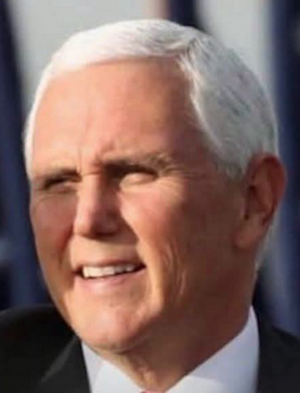
Mike Pence declared this week: “If the Iran deal is over, President Trump should unleash the Armed Forces of the United States to finish the job: destroy their nuclear and missile programmes, end support for terrorist proxies and restore freedom of navigation in the Strait of Hormuz.”
Finish the job. Consider the phrase. It implies the job was ever within America’s power to finish — that somewhere in the arsenals of the United States there exists a munition capable of reopening the Strait of Hormuz.
There isn’t. There never was. The past 130 days have proven it beyond any argument, and the fact that Pence has not absorbed the lesson tells you how little the American political class understands about the war it started — and how catastrophically ill-advised Trump has been by the men around him.
What the bombs couldn’t do
Let us recall the record, because the record is merciless.
On 28 February, the United States and Israel launched their grand aerial campaign against Iran. Washington called it Operation Epic Fury. Iran answered by closing the Strait.
The United States then imposed a naval blockade of Iranian ports, struck hundreds of targets, and deployed the full theatrical repertoire of American power. Thirteen American service members came home in coffins. More than 7000 people died across the region.
And the Strait? The Strait remained closed.
Tanker traffic through the world’s most vital energy chokepoint collapsed by more than 90 percent. Some 360 vessels sat stranded on either side of the passage.
Eight of the world’s largest container lines abandoned the Gulf entirely and sent their ships around the Cape of Good Hope, as if Suez and Hormuz had never been cut, as if we had returned to the age of sail.
That is the “job” Pence wishes to finish. Four months of the most intensive American military operations since Iraq did not restore freedom of navigation for a single day. Only a negotiated settlement — the Islamabad Memorandum of June 17, brokered by Pakistan, not won by CENTCOM — briefly cracked the Strait open.
And when that truce collapsed this week, with Iran striking commercial vessels and Trump declaring the ceasefire over, the Strait slammed shut again within hours.
The bombs opened nothing. The diplomats opened it briefly. The bombs are now guaranteeing it stays closed. This is the arithmetic Pence cannot count.
The judge who actually rules the strait
Here is what Pence, and evidently Trump’s advisers, have never understood: the Strait of Hormuz is not governed from Washington, or even from Tehran. It is governed from London, from the unglamorous committee rooms of the marine insurance market.
I spent decades in international shipping law, across Iran, Indonesia, Ukraine and half the maritime world, and I can tell you that no force on earth moves a merchant vessel that its insurers have abandoned.
Every commercial ship afloat carries three layers of insurance. There is Hull and Machinery cover — H&M — insuring the vessel itself, an asset worth $100 million or more for a modern VLCC. There is Protection and Indemnity cover — P&I — insuring against third-party liabilities: pollution, crew death and injury, wreck removal, cargo claims.
And there is Cargo insurance, covering the value of the goods themselves — and a laden supertanker’s crude can today be worth nearly as much as the ship that carries it.
All three carry war risk exclusions. War, mines, drones, missiles — none of it is covered under standard terms. To sail into a zone of conflict, an owner must purchase separate War risk cover, and that cover is switched on and off by the Joint War Committee of the London market, which maintains the list of designated high-risk areas.
When the JWC lists an area, premiums explode, cover becomes voyage-by-voyage, renewable in seven-day windows, cancellable on notice.
When underwriters lose confidence entirely, cover simply evaporates — and a ship without insurance does not sail. Its lenders forbid it. Its charterers refuse it. Its flag state warns against it.
Now observe what actually happened in this war. Within 48 hours of the February strikes — before Iran had laid a single mine, before the IRGC had struck a single tanker — the war risk market had already shut the Strait. Insurers terminated existing policies. The Joint War Committee designated the entire Persian Gulf.
Premiums that stood at 0.25 percent of hull value surged past 1 percent, then to several percent — for a single transit. On a $150 million VLCC, that is millions of dollars per voyage, before the cargo is even insured.
Daily charter rates for supertankers quadrupled toward $800,000.
The insurance market closed the Strait before Iran’s navy did
The commercial shutdown preceded the physical blockade. That single fact demolishes Pence’s entire thesis. You cannot bomb your way to freedom of navigation, because freedom of navigation is not a military condition. It is a commercial one.
It exists when a Lloyd’s underwriter is willing to write a policy at a price a shipowner can bear. No B-2 strike has ever changed an actuarial table in the attacking power’s favour. Every strike makes the table worse.
The market never believed the peace
And here is the detail that should end this debate permanently. Even during the June truce — even after Trump stood at Versailles proclaiming “Ships of the World, start your engines” — the war risk designation never came off.
The Joint War Committee did not delist the Gulf. Premiums remained at multiples of their pre-war level. Underwriters kept writing cover voyage by voyage, week by week, ready to withdraw at the first drone.
The men who price risk for a living looked at Trump’s Memorandum of Understanding and rendered their verdict: they did not believe it. July 8 proved them right. The market understood what the White House did not — that a ceasefire built on deferred questions, contested toll clauses and mutual bad faith was a pause, not a peace.
Now, with the MOU dead, any prospect of the designation lifting is dead with it. The Strait’s status as a war zone is entrenched for the foreseeable future.
Mike Pence proposes to fix this with more air strikes. Understand what that means in practice: every American bomb that falls on Iran adds basis points to a war risk premium, extends the JWC’s listed area, and pushes more tonnage onto the long route around Africa.
Even if the United States Navy physically escorted every tanker — an operational fantasy in waters saturated with Iranian drones, missiles and mines — the underwriters would still price the corridor as a battlefield, because it would be one.
Washington already tacitly admitted this when it directed the Development Finance Corporation to stand up a $40 billion reinsurance backstop, turning the American taxpayer into the marine insurer of last resort. When your own government must insure the ships because the market will not, you have conceded that the market does not believe your military assurances.
There is no clearer confession of strategic failure.
The victory America threw way
The tragedy — and I use the word deliberately — is that America had its exit in March. In the first weeks of the war, Trump declared that Iran’s military had been destroyed and the Strait was open.
The obvious move, the move a Bismarck or a Nixon would have made, was to declare victory and walk away. Announce that the nuclear facilities lay in ruins, that the objective was achieved, and that the Strait of Hormuz — through which barely a trickle of America’s own oil passes — was henceforth the problem of those who actually depend on it: China, which draws over 40 percent of its seaborne crude through the passage, India, Japan, Korea, Europe.
Let Beijing negotiate with Tehran over tolls. Let Asia underwrite the convoys. America, the world’s largest oil producer, could have watched from across two oceans.
Instead, Washington chained its prestige to a waterway it does not need and cannot control, and handed Iran the greatest strategic gift imaginable: a permanent instrument of leverage over the global economy that costs Tehran almost nothing to wield.
Iran does not need to win a naval battle. It needs only to keep the actuaries nervous — a drone here, a mine there, a seized tanker when the mood takes it. Its Persian Gulf Strait Authority now sells passage to favoured nations at seven-figure fees, exercising precisely the sovereignty over the Strait that its negotiators promised it would never surrender.
The Strait, as Iran’s chief negotiator said plainly, will not return to pre-war conditions. He was telling the truth. Washington simply refused to hear it.
The lesson Pence will never learn
This is what the collapse of the old order looks like in practice — what I have called the Legitimacy Principle. American power can destroy, but it can no longer compel. It can level a nuclear facility, but it cannot make a Greek shipowner send a $150 million vessel and 25 souls through a minefield.
It can blockade Iranian ports, but it cannot force a Lloyd’s syndicate to write a policy it knows will lose money. The instruments that actually govern the world’s arteries — insurance markets, charter rates, the quiet risk calculus of men in London and Singapore and Piraeus — do not answer to CENTCOM.
Mike Pence looks at the Strait of Hormuz and sees a target list. A shipping lawyer looks at it and sees a war risk clause. The clause has beaten the target list for 130 days, and it will beat it for a 130 more.
“Finish the job” is not a strategy. It is the sound of a man who has learned nothing, advising a president who was told nothing, about a war that neither of them can win.
Lim Tean is a Singaporean lawyer, politician and commentator. He is the founder of the political party People’s Voice and a co-founder of the political alliance People’s Alliance for Reform. He also hosts Lim’s Substack.
Original source: https://analysis1.mil-osi.com/2026/07/10/the-man-who-would-bomb-the-hormuz-actuaries-and-he-hasnt-got-a-clue/