

Source: The Conversation (Au and NZ)
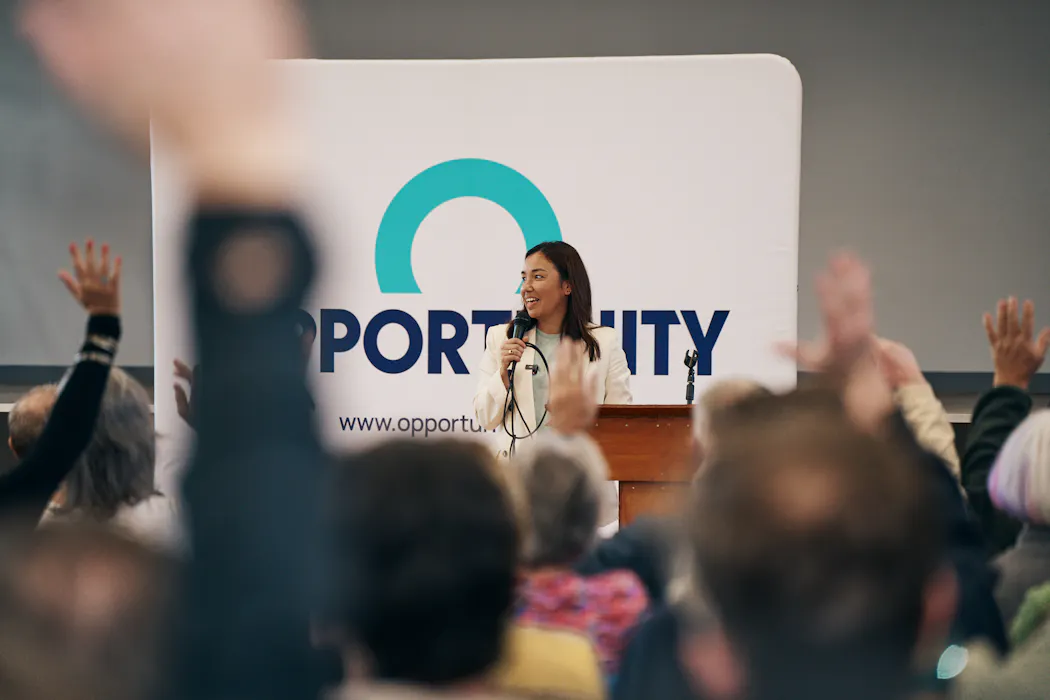
Of all the political parties contesting New Zealand’s looming general election, one seems to be generating more buzz than almost any other.
That’s The Opportunity Party (TOP), whose recent polling surge has drawn no shortage of media analysis – to the point we’re seeing commentary on commentary.
The most recent 1News/Verian poll put the party on 4.6% support, edging it closer to the 5% threshold needed to enter parliament. The latest Roy Morgan poll had the party over the line at 6.5%.
Whether TOP can get there on November 7’s election remains to be seen. But its rise raises important questions about the election campaign – and the flavour of the next government.
What’s behind the hype?
TOP’s climbing popularity might reflect dissatisfaction with New Zealand’s increasingly fractious politics, concern about the country’s direction, and a desire for policy over culture wars.
The potential for generational change might also appeal, particularly to younger voters dismayed at the prospect of 81-year-old Winston Peters, of populist New Zealand First, again playing kingmaker after the election.
TOP appears to be capitalising on the electoral space left by the steady erosion of support for the country’s two major parties: the ruling centre-right National and centre-left challengers Labour.
Where exactly does TOP sit? Its new leader, 38-year-old Quilae Wong, insists TOP is a centrist party – and with sound reason. That allows her to distance TOP from the politics of polarisation while distinguishing it from the other pretender to the centrist throne.
Whatever New Zealand First may once have represented, it is hard to describe it as a centre party now. Its leader’s rhetoric and the party’s embrace of populist policies place it firmly on the right. That gives Wong room to present TOP as a party of evidence over ideology.
The fact TOP attracts criticism from both the left and the right also lends some support to its centrist claim. Whether its policies are genuinely centrist, however, is less clear.
Its positions on citizens’ incomes, a land tax, healthy oceans and the Crown’s treaty responsibilities might sit comfortably with left-leaning parties, but are anathema to the current administration.
Notwithstanding that, TOP scores poorly on conventional measures of intra-party democracy. Its constitution centralises power far more than those of Labour or the Greens.
The party’s board, only partially and indirectly elected by members, appoints the leader, while policy is the exclusive preserve of a policy committee. Unusually, members are “expressly prohibited from interfering with the development of policy”.
Nor does TOP have local or regional membership branches. In these respects, its internal structure more closely resembles right-libertarian ACT than a conventional centrist party.
Can TOP tip the balance?
It should not be assumed, of course, that TOP will be part of the next parliament. With election day still four months away, a handful of encouraging polls is no guarantee of electoral success.
Nonetheless, in the context of shrinking support for the traditional major parties and an increasingly fluid, sometimes febrile political environment, there are good reasons to keep a close eye on TOP.
The next round of polls could prove pivotal. If Wong’s party seems more likely to clear the 5% threshold, it may begin to look electorally viable to voters who like its policies but fear their party vote will not count.
It’s also not its only path to parliament. Wong is notably contesting Mt Albert, the electoral seat Labour’s Helen White holds with a razor-thin majority. If TOP is hovering around the 5% threshold come the election, Labour and Green supporters might think seriously about giving their electorate vote to Wong.
Ultimately, whether TOP can finally break into parliament after its failed attempts in the past three elections may depend on where its support comes from.
If it is simply recycling votes from the left, Labour and Green supporters are unlikely to back Wong or her party. But if TOP can attract unenrolled voters – particularly younger ones – the strategic calculus changes.
Much depends, too, on the signals TOP sends concerning post-election coalition negotiations.
For now, Wong can get away with not ruling anything or anyone out. But Labour, Green or Te Pāti Māori supporters in Mt Albert, or anywhere else, are unlikely to take the risk that TOP might return the incumbent government to power. The pressure on TOP to declare its hand one way or the other will only grow from here.
There are many ways the coming months may play out for it. TOP may fall short, as it has in the past. If it does, but in the process attracts close to 5% of the party vote, National, ACT and New Zealand First will fancy their chances of a second term.
Even if TOP does become the first party to enter parliament under New Zealand’s MMP voting system without its roots in either National or Labour, it may still prove irrelevant to the formation of the next government if its support has come largely from left-leaning parties.
But if TOP does hold the balance of power, a self-described centrist party will have to decide whether the next government leads from the left or the right.

Richard Shaw does not work for, consult, own shares in or receive funding from any company or organisation that would benefit from this article, and has disclosed no relevant affiliations beyond their academic appointment.
Original source: https://analysis1.mil-osi.com/2026/07/06/this-centrist-party-is-rising-in-nz-polls-will-it-prove-power-broker/