
Source: The Conversation – Canada
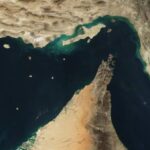
It took only five days after the attack on Iran by the United States and Israel in late February for Iran to close the Strait of Hormuz, one of the world’s most vital energy and maritime chokepoints.
Describing the waterway as a place where Iran and the U.S. flex their muscles doesn’t tell the whole story. The story did not start on March 4, when Iran closed the strait with a combination of asymmetric naval tactics, geographic control and maritime blockades.
It was years in the making. Understanding why the strait stayed open for so long, and why it’s not open now, requires thinking not in terms of current entities but in terms of loops.
A causal loop diagram describing variables and relationships in this article.
Positive and negative arrows indicate positive and negative causal relationships. (Behrouz Bakhtiari), CC BY The loop that kept the peace Iran has long leveraged the Strait of Hormuz to transport its own oil to international markets.
The revenue generated worked as Iran’s binding self-constraint. In the language of systems thinking, this is called a balancing loop: a mechanism where the system corrects itself. Think of the predator-prey dynamics in ecology: when rabbits multiply, foxes thrive.
When rabbits are scarce, fox populations decline and the rabbit population recovers. The oscillation in Iran’s relationship with the West followed the same self-correcting logic. Iran’s revenues were the rabbits and the West’s diplomatic pressure were the foxes.
The balancing self-deterrence brake loop: lower revenues increased Iran’s willingness to compromise.
Increased willingness from Iran encouraged more diplomatic openness from the West toward diplomacy which resulted in more diplomatic engagement and sanction relief, which restored Iran’s revenue. (Behrouz Bakhtiari), CC BY What’s known as the balancing self-deterrence brake loop kept aggression in check until its breakdown in 2025.
The strait was not kept open by the U.S. navy. It was held open by the logic of restraint and self-interest. The 2015 Joint Comprehensive Plan of Action (or JCPOA) was this loop in full action.
By 2013, Iran’s economy had contracted sharply as its oil exports fell to roughly one million barrels per day. Exactly as the loop predicted, the lowered revenue resulted in higher willingness to compromise. Iran’s centrist President Hassan Rouhani signalled readiness for serious negotiations.
The West welcomed the approach and offered a deal to Iran that would provide sanctions relief in exchange for nuclear constraints. The JCPOA restored Iranian oil exports, and although its aggression continued to be a threat, it never crossed into action.
Read more: The Iran nuclear talks are resuming, but is there any trust left to strike a deal? How the loop was broken U.S.
President Donald Trump’s withdrawal from the JCPOA during his first term in 2018 was the first blow to the loop, as it broke the link between Iran’s revenues and diplomatic engagement with the West.
Even when Iran’s revenues fell and it signalled a willingness to negotiate, opening a diplomatic channel proved too complicated after the fallout of the nuclear deal’s collapse. The situation was exacerbated by the 2020 assassination of Iranian military leader Qasem Soleimani.
After his death in a U.S. air strike, any Iranian official contemplating concessions, or a willingness to compromise, appeared to be capitulating to the enemy. Through these actions, Trump effectively dismantled the self-deterrence loop link by link.
Simultaneously, as western engagement with Iran waned, China stepped in. China’s share of Iranian oil exports rose to almost 90 per cent by 2023 (from roughly 25 per cent in 2017 when JCPOA was in full effect). This ensured that the self-deterrence brake loop remained weak.
The reinforcing and self-growing China loop filled the space the self-deterrence brake loop had vacated. The reinforcing China loop held a floor under Iran’s revenue. As the West’s diplomatic engagement lowered, Iran and China got closer to each other.
Unlike balancing loops, reinforcing loops are self-growing. (Behrouz Bakhtiari), CC BY While the balancing self-deterrence brake loop was losing its grip, another loop — the reinforcing and self-growing aggression loop — was gaining steam. The 12-Day War of June 2025 that started when the U.S. and Israel attacked Iran was not the beginning of the crisis.
It was the moment when accumulated pressure in the aggression loop, along with years of weakening the self-deterrence mechanism, materialized into what moderates around the world had been warning us about for more than a decade.
The reinforcing aggression loop: Iran pushes, global markets feel pain, the West is pressured to offer a deal, Iran gets richer and in the absence of the self-deterrence brake, Iran becomes more aggressive instead of pulling back. (Behrouz Bakhtiari), CC BY February 2026: The dam finally breaks Operation Epic Fury was, in systems thinking, a direct injection of energy into the reinforcing aggression loop.
It not only destabilized Iran’s internal political and financial state, but also destroyed Iran’s willingness to engage in diplomatic talks. The Iranian regime saw no clear pathway forward but to fight back hard to survive.
The Strait of Hormuz was closed for the first time in the life of the Islamic Republic. Restoring the brake requires both a credible diplomatic offer from the West and genuine invitation to China to take part in a mutually beneficial diplomatic settlement with Tehran.
The strait will eventually open again. But between now and eventually, Pakistani children are out of school to conserve fuel. Bangladesh’s garment factories are running at half capacity. In North America, gas prices continue climbing and the cost of everything that moves by truck is rising with them.
None of this was inevitable. The feedback structure was visible. The trajectory was traceable. The blockade was the predictable output of a system with a stabilizing feedback loop that had been systematically dismantled over a decade.
The question now is not whether the next crisis will come.
It’s whether anyone will read the signs — and the loops — before it does.
Behrouz Bakhtiari does not work for, consult, own shares in or receive funding from any company or organisation that would benefit from this article, and has disclosed no relevant affiliations beyond their academic appointment.
Original source: https://analysis1.mil-osi.com/2026/05/28/the-strait-of-hormuz-the-supply-chain-loop-that-broke-the-world/