

Source: The Conversation (Au and NZ) – By Mark Beeson, Adjunct Professor, Australia-China Relations Institute, University of Technology Sydney
Keir Starmer is the United Kingdom’s sixth prime minster in the past ten years. For a country that likes to think of itself as the birthplace of modern democracy and a model of stability in a turbulent world, this is not a good look.
It’s also a painful reminder that democratic politics everywhere is becoming increasingly febrile.
Much of the chaos that has characterised contemporary British politics has been self-inflicted. The self-promoting Conservative prime ministers who preceded Starmer – Boris Johnson and Liz Truss – were clearly part of the problem. But others have made catastrophic errors of judgement, too. David Cameron’s decision to have a referendum about leaving the European Union is an egregious case in point.
Understandably enough, this revolving door of prime ministers led to a desire for stability and predictability. This culminated in the Labour Party’s thumping election win in 2024 under Starmer. He promised to restore public confidence in politics through a process of calm and careful rebuilding.
Starmer’s failures and missteps
It hasn’t quite worked out that way. On the contrary, Starmer has been criticised for being too cautious and unwilling to make the sort of bold decisions that are seen as necessary to address some of Britain’s underlying problems.
He has also been tagged with the unfortunate nickname “Never Here Keir” for the perception he spends more time with his international counterparts than he does focusing on domestic issues.
Some of these are familiar to residents in democracies around the world: cost-of-living pressures, unaffordable housing, unhappiness with public services, and a failure to spell out – much less follow through on – a progressive social agenda that one might expect from a supposedly left-of-centre political party.
Specific to the UK, Starmer has also been criticised for:
Potholes, too, have become symbolic of Starmer’s inability to fix even the simplest of problems. This is the kind of issue guaranteed to induce anger among middle-of-the-road voters. After spending the past few weeks driving around Britain, I can understand their frustration.
All this helps explain why so many Labour voters deserted the party in the recent local elections.
Lacking courage and failing to connect
But it’s not just the UK. Centrist governments everywhere are struggling to convince voters they have the vision or courage to address the parochial issues that generally resonate with the public.
Like Starmer, Australian Prime Minister Anthony Albanese and German Chancellor Friedrich Merz both suffer from a charisma deficit – and are facing challenges from surging far-right parties. This is partially because they have tried to occupy the middle ground – it leads to underwhelming policy agendas that are nevertheless criticised on both sides of the political spectrum.
At least Merz has had the courage to criticise the increasingly destabilising actions of US President Donald Trump, for all the good it has done him.
Yet, as France’s Emmanuel Macron reminds us, there are few votes in foreign policy. Macron is struggling in the polls too. His international prominence has contributed to a perception of arrogance and a failure to understand – much less address – domestic issues.
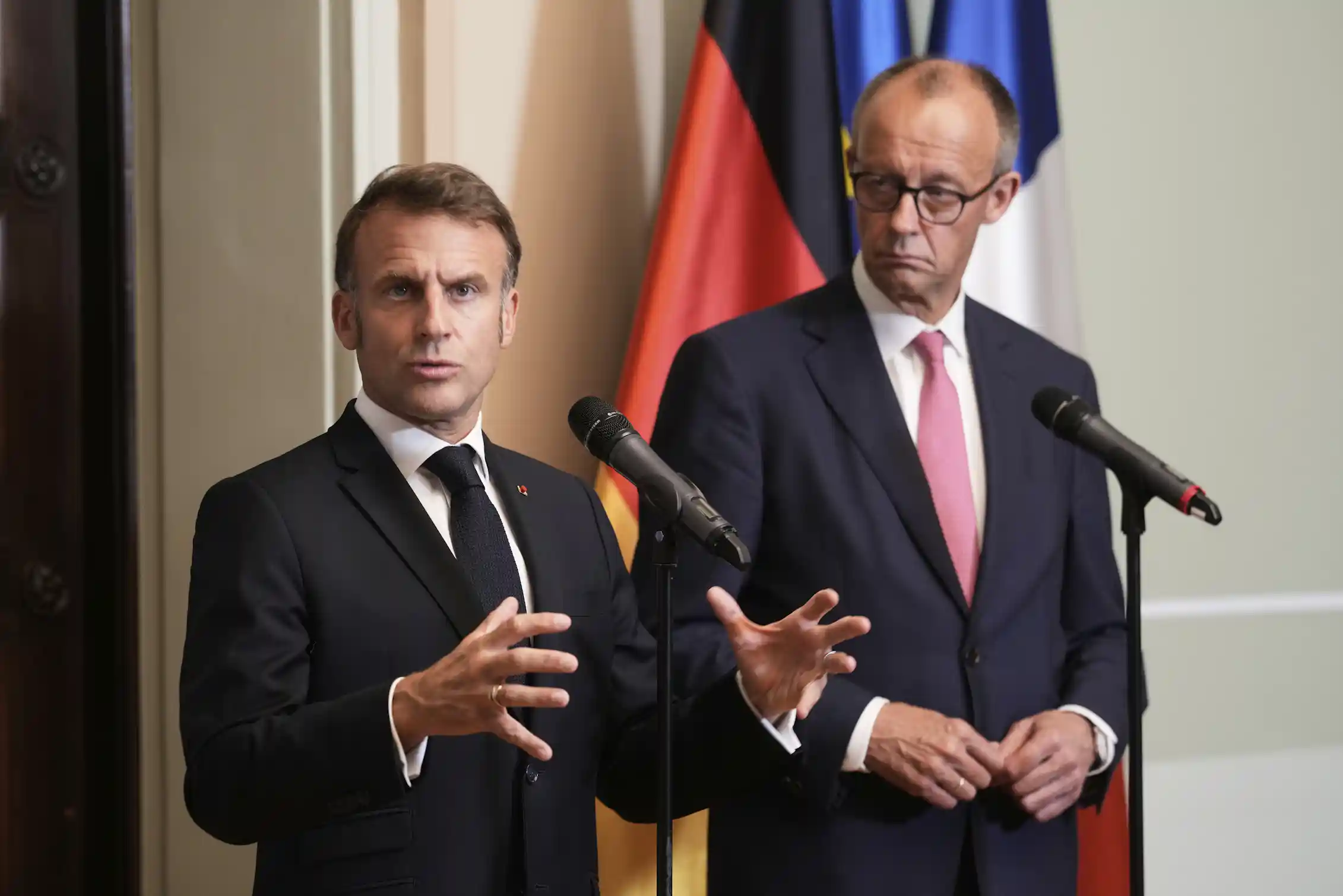
As Starmer has discovered in the UK, defenestration remains a real danger for leaders in an era when political convulsions are increasingly commonplace.
This may be one area in which Britain really is a world leader. The beneficiary of this recent political chaos is the far-right Reform UK Party, led by Nigel Farage. Despite the allegations of racism and incompetence that have been levelled at him and his party, there is a real chance Farage could become Britain’s next prime minster in the 2029 general elections.
Where does the UK go from here?
Before this can happen, though, Labour will likely change leaders in an effort to revive its popularity. The main contenders are circling, hoping Starmer will obligingly step aside. Regicide has its downsides, after all.
Whoever emerges from the leadership saga, the expectations of voters in the UK – like those elsewhere – may simply have become too great, too complex and too contradictory for any leader to adequately satisfy them.
A real test of this thesis will be provided by the popular Manchester mayor, Andy Burnham, who is busily engineering a return to parliament. If he can defeat Reform in the necessary byelection, that will likely cement his place as Starmer’s successor.
And yet, he may face the same political headwinds from a cynical electorate. Polarisation is now endemic in the West, and democracy is no longer seen by many disillusioned young people as the political gold standard.
No wonder young people are increasingly despairing about their futures. Not even filling in all those potholes is likely to change that in Britain.
– ref. Starmer’s troubles may be self-inflicted. But voters everywhere are fed up with leaders lacking courage – https://theconversation.com/starmers-troubles-may-be-self-inflicted-but-voters-everywhere-are-fed-up-with-leaders-lacking-courage-283056