Source: The Conversation (Au and NZ) – By Adriana Marin, Lecturer in International Relations, Coventry University
Tommy Shelby returns in Netflix’s new Peaky Blinders film, The Immortal Man, a figure defined by control, composure and calculated violence. He navigates risk, trauma and conflict with an almost unnatural endurance. No matter the pressure, he adapts, survives and remains in charge.
The Immortal Man follows Shelby as he navigates a tightening web of political intrigue and criminal threats beyond Birmingham, forced to operate at a higher, more dangerous level while struggling to maintain control. As power shifts and new alliances form, he is pushed into more dangerous territory, balancing strategy, loyalty and survival, while his past continues to shape his decisions.
Irish actor Cillian Murphy delivers a masterful performance, capturing Shelby’s authority while hinting at the strain beneath the surface.
As the film’s title suggests, Shelby reflects a broader cultural archetype: the “immortal man”. He is not literally invincible, but rather resilient – a character who absorbs damage without collapsing, who endures where others fall apart.
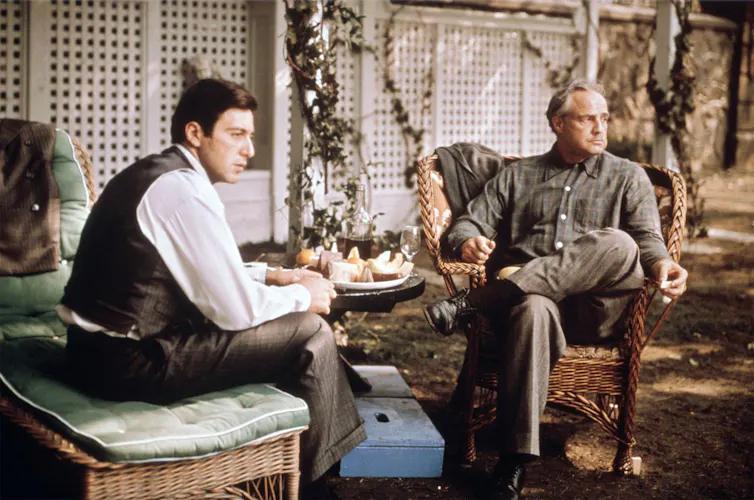
This figure appears consistently in crime drama – Vito and Michael Corleone in The Godfather, Jimmy Conway in Goodfellas, Tony Soprano in The Sopranos – and its popularity reveals something important about how we understand crime, masculinity and power.Criminology has long challenged the idea that criminal figures are inherently irrational or chaotic. The “enterprise model” of organised crime reframes criminal activity as structured, profit-driven and responsive to market conditions.
From this perspective, participants resemble entrepreneurs operating within illicit economies rather than criminals. Tommy Shelby fits this model closely. His actions are calculated, with violence deployed as a means to an end rather than an impulse.
The emphasis falls on strategy, recognising opportunity, managing risk and consolidating power in ways that echo legitimate business practices. This framing shifts crime away from images of chaos and unpredictability, presenting it instead as controlled and methodical. Yet rationality alone is not enough to account for his appeal.
Masculinity, control and contradiction
Cultural criminology, particularly the work of Jeff Ferrell, draws attention to the symbolic and emotional dimensions of crime. It is not only about material gain, it is also about identity, meaning and representation. Shelby is not just an economic figure but a cultural performer. His authority is constructed through style, symbolism and reputation.
Control, in this sense, is not only exercised but communicated: his presence, speech and appearance are tightly managed, projecting authority through restraint as much as action. This stylisation makes organised crime seem structured and, for some audiences, appealing. The “immortal man” is therefore not just a survivor, but a figure who appears to master both his environment and himself.
This performance of control is inseparable from masculinity. Sociologist R.W. Connell’s concept of “hegemonic masculinity” (the dominant form of masculinity in society that shapes expectations of how men should behave) helps explain Shelby’s appeal.
He embodies authority, emotional restraint and the capacity to command. He leads decisively, conceals vulnerability and maintains dominance across different spheres of life. Yet what makes the character compelling is the tension within this model. Shelby’s authority is shaped by trauma – war, loss and psychological strain.
He aligns with the ideals of dominance while simultaneously revealing their cost. The “immortal man” is defined not by being invincible, but by his ability to endure and keep going under pressure.
In this sense, masculinity is not just power, but the ability to maintain control while carrying internal damage. Shelby intensifies this model, presenting a form of dominant masculinity rooted in survival, where dominance is sustained through emotional containment rather than the absence of vulnerability.
This tension reinforces a familiar expectation: that masculinity is proven through resilience without visible collapse. At the same time, it adds complexity, presenting strength and fragility as intertwined rather than oppositional.
Sociologist Robert Merton’s strain theory suggests that when access to legitimate success is limited, individuals adapt by pursuing alternative routes.
Shelby’s trajectory reflects this logic. He does not reject the pursuit of wealth, status or influence, but he reworks the means of achieving them. Organised crime becomes a rational response to constraint, blurring the boundary between legitimate and illegitimate enterprise.
This is what gives the figure such resonance. Shelby appears to overcome structural limits while maintaining control, offering a version of success that feels both transgressive and recognisable. His appeal lies not only in what he achieves, but in how he achieves it: with certainty, authority and self-possession in contexts where those qualities feel increasingly scarce.
The endurance of this figure reflects wider cultural anxieties. In periods of instability, characters who impose order and act decisively become especially attractive. At the same time, as traditional models of masculinity are questioned, the “immortal man” offers a reassertion of clarity: an identity grounded in independence and dominance.
Shelby represents more than a criminal figure. He becomes a cultural response to uncertainty, embodying a form of masculinity and authority that promises control, even as it quietly reveals the strain required to sustain it.
Rethinking the ‘immortal man’
The issue is not that audiences engage with these narratives, but that their underlying assumptions often go unexamined. The “immortal man” ties together masculinity, power and violence in ways that appear natural but are, in fact, constructed. Authority is best demonstrated through domination, that emotional restraint is a marker of strength, and that success justifies the means by which it is achieved.
These associations are reinforced through repetition. Criminological research offers a more complex picture. Organised crime is rarely as stable or controlled as it appears on screen. It is often characterised by volatility, exploitation and harm, frequently directed at the most vulnerable.
What figures like Shelby offer, then, is not a reflection of reality, but a compelling simplification of it, one that continues to resonate because it speaks to enduring questions about power, identity and control in uncertain times.
There is, ultimately, nothing immortal about men like Tommy Shelby. What endures instead is the narrative itself: a story that continues to resonate because it speaks to persistent anxieties about inequality, control and the limits of legitimate success.
– ref. Peaky Blinders The Immortal Man: why mythic figures like Tommy Shelby continue to captivate us – https://theconversation.com/peaky-blinders-the-immortal-man-why-mythic-figures-like-tommy-shelby-continue-to-captivate-us-279417