Source: The Conversation (Au and NZ) – By Elle Bowd, Research Fellow, Fenner School of Environment and Society, Australian National University
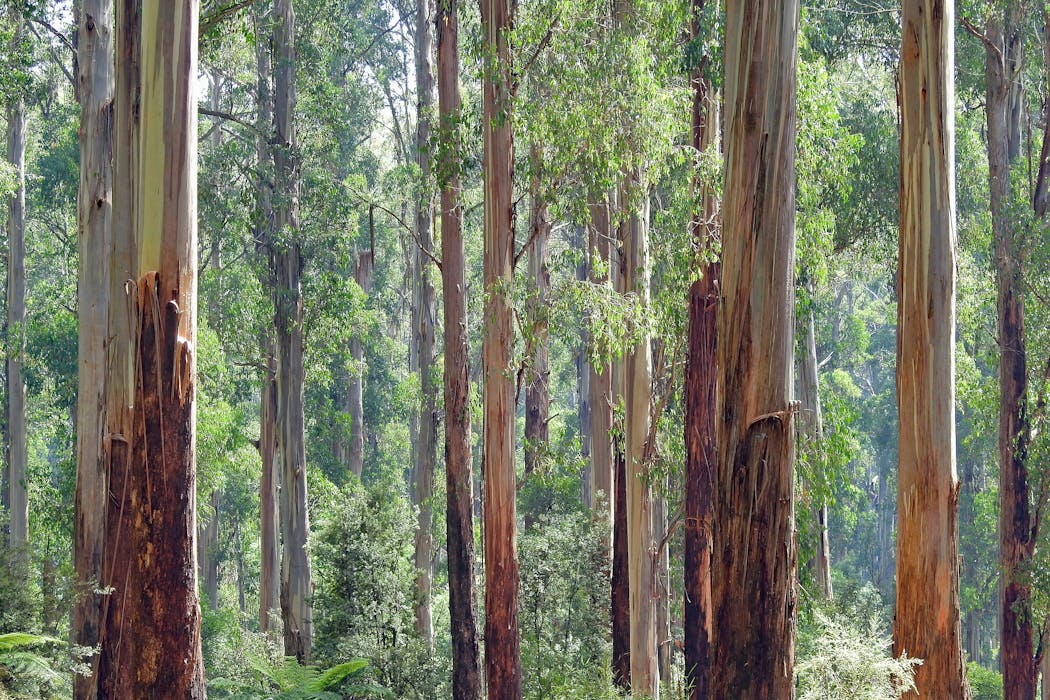
There has been much global discussion about the best ways to manage Earth’s forests in an era of climate change and more frequent bushfires.
Some foresters and forest managers support and recommend large-scale industrial thinning of forests, where a proportion of the trees are removed (thinned) with machines to increase the size of the remaining trees. Thinning is commonly used in timber plantations, as it accelerates the development of timber trees.
In its new forest plan, the Victorian government has funded a “healthy forests” program. This will likely entail reducing the number of trees in the forest and increasing the space between trees. This plan could lead to extensive mechanical thinning in the state’s forests. Large-scale mechanical thinning has already been used in native forests in western Victoria.
Plans for mechanical thinning of forests raises important questions: what effect will this have? Could it be harmful? And is it necessary for forest health?
In our new study, we describe how mountain ash forests naturally change over time, from young, dense and uniform forests 15 years after wildfire, to forests with lower densities of large trees (and smaller trees) in older age. Our work suggests human intervention is not needed to reduce the density of trees or create a diversity of tree sizes needed for wildlife.
What we know about thinning
Some research suggests thinning can increase reduce the risk of severe wildfires in some forests (such as some pine forests in the United States). But in other types of forests, including in some of Australia’s eucalypt forests, thinning either has no effect on fire or can even make fires worse. Indeed, Australian forestry management manuals clearly warn of increased fire risks from thinning.
Thinning has also been shown to increase water yield and drought resilience in some forests (including tall eucalypt forest), but these benefits are short-lived as plants quickly regenerate in the new gaps formed by thinning.
Last October, the Victorian government released its Future of State Forests report. It describes a “healthy forests” program in which widespread mechanical thinning is very likely to be employed. Large-scale mechanical thinning has already been used in native forests in western Victoria, such as the Wombat State Forest, to reduce trunk density and increase space between trees. Current government policy will likely see it applied in the state’s Central Highlands and East Gippsland.
Using mechanical thinning can be counterproductive. For example, thinning with large machines can compact soils, increase the risk of bushfire, degrade habitat for wildlife, and produce carbon emissions. It’s also expensive (in the US, it costs about $US1270 ($A1830) per hectare, with the costs likely to significantly outweigh the short-term benefits.
What many people might not realise is forest trees naturally reduce and “thin” over time. This reduction happens as the size of the remaining trunks increase, a process of natural “self thinning”. In fact, natural self-thinning is a key ecological principle that shapes almost all forests and woodlands globally.
What we found in Victorian forests
In our new study, we describe the process of natural self-thinning in Victorian forests of mountain ash, the tallest flowering plants in the world.
Our work quantifies how these forests naturally reduce the numbers of trees by 50 to 60%, from young forests regenerating from fires in 2009, through to old growth forests (greater than 120 years). This natural self-thinning occurs because less competitive trees lose the race for light and other resources and die.
As mountain ash forests matured, the number of trees declined naturally and markedly. In young forests (15 years old) tree densities were high (7000 trees per hectare), but in old forests (120 years old) tree densities were much lower (1450 trees per hectare). Not all tree species reduced at the same magnitude as others. For example, young forests were dominated by thousands of wattles and eucalypts per hectare. This profile changed significantly in old growth forests to less than 100 eucalypt trees and about 20 wattle trees per hectare on average.
In a mountain ash forest, the number of trees on a given site also varied if it was on a steep slope or flat area, and at different elevations. This variation is likely to be the result of light, moisture and soil properties.
Importantly, as the number of trees in mountain ash forests reduce naturally over time, trees become larger and more varied in size. This is because older forests contain trees of different ages, some shorter and smaller, and others larger and taller. Other studies have shown forests with a diversity of tree sizes are important for animals such as arboreal marsupials and birds.
What forests look like without intervention
Our new study of natural self-thinning is significant for many reasons. First, it sets the benchmark for how large trees will grow in mountain ash forests over time, and what these forests look like without human intervention. This can be used to guide restoration practices. Second, it demonstrates mechanical thinning is not needed to help these forests to develop into older stages.
Getting forest management right is critical — under the current climate, forests face a hotter and more uncertain future. Evidence-based ecological management is essential in forests and we must aim to avoid risky management, such as the use of widespread mechanical thinning in these forests.
Instead, the limited funding available for forest management should be employed to support other restoration activities with a higher chance of success. These could include targeting areas of forest where restoration has failed after past logging operations. Logging has devastated Victoria’s native forests, and new research shows 20% has failed to grow back.
Forest managers and policymakers need to understand mountain ash forests naturally self-thin and interventions like mechanical thinning are not needed. At best, large-scale mechanical thinning operations are essentially a waste of money. At worst, they degrade forests, making them more flammable, eroding habitat, compromising water security and compacting soils.

Elle Bowd receives funding from the Australian government, the NSW government, and the ACT government.
David Lindenmayer receives funding from the Australian government, the Victorian government, and the Australian research Council. He is a councillor with the Biodiversity Council, and a Fellow of the Australian Academy of Science, the American Academy of Science, the Ecological Society of America and the Royal Zoological Society of NSW. He is a member of Birdlife Australia.
– ref. Victoria’s mountain ash forests naturally thin their trees. So why do it with machines? – https://theconversation.com/victorias-mountain-ash-forests-naturally-thin-their-trees-so-why-do-it-with-machines-268201