Source: The Conversation (Au and NZ) – By Kerry Brown, Professor of Employment and Industry, School of Business and Law, Edith Cowan University
For teens, a holiday or weekend job is a good way to earn pocket money and learn a new range of skills.
But given the historical and ongoing exploitation of child labour across the globe, strict laws are set out to protect children.
Australia follows the 1973 International Labour Organisation (ILO) convention on a minimum working age. Under this convention, the standard age for employing young people is 15 years old.
But people can start work before that, subject to additional legal protections. Even if young people are volunteers and undertaking unpaid work, there are similar restrictions on their activities to the limits in paid employment.
So if you have a young person in your life who’s thinking about getting a job, it’s worth knowing what the laws and rules are.
What are the rules for kids under 15?
Every state in Australia has specific requirements for employing workers who are under 15 years old. These specifications differ from state to state, but most principles are broadly similar.
For employers, they need to hold a child employment licence to employ children under 15.
There are set limits on how many hours young people can work, depending on their age. Generally, they can do up to ten hours each week.
There are also restrictions on doing heavy work. Young workers under 15 years can only undertake light duties. In Victoria, for example, a child cannot work on a building site or on a fishing boat.
There are also rules for when children can work. Working during school hours is generally not allowed because state laws require children to attend school. Legislation about children in the workplace is built around ensuring they access education.

Nick David/Getty
Some jurisdictions have special provisions around times of day children under 15 can work.
In Western Australia, young workers aged 10–12 cannot start work earlier than 6.00am or finish their work after 7.00pm. Children aged 13–14 cannot start before 6.00am but can finish work at 10.00pm.
In Tasmania, children between the ages of 11 and 14 aren’t allowed to work between 9.00pm and 5.00am of the following day, unless it’s for charity or school.
There are similar laws in New South Wales, Victoria and Queensland.
What sorts of jobs can kids under 15 do?
While laws are in place to protect children from exploitation, there are many opportunities for children to be part of the workforce, starting as young as ten or 11 years in the delivery services industry or as child models in the advertising industry.
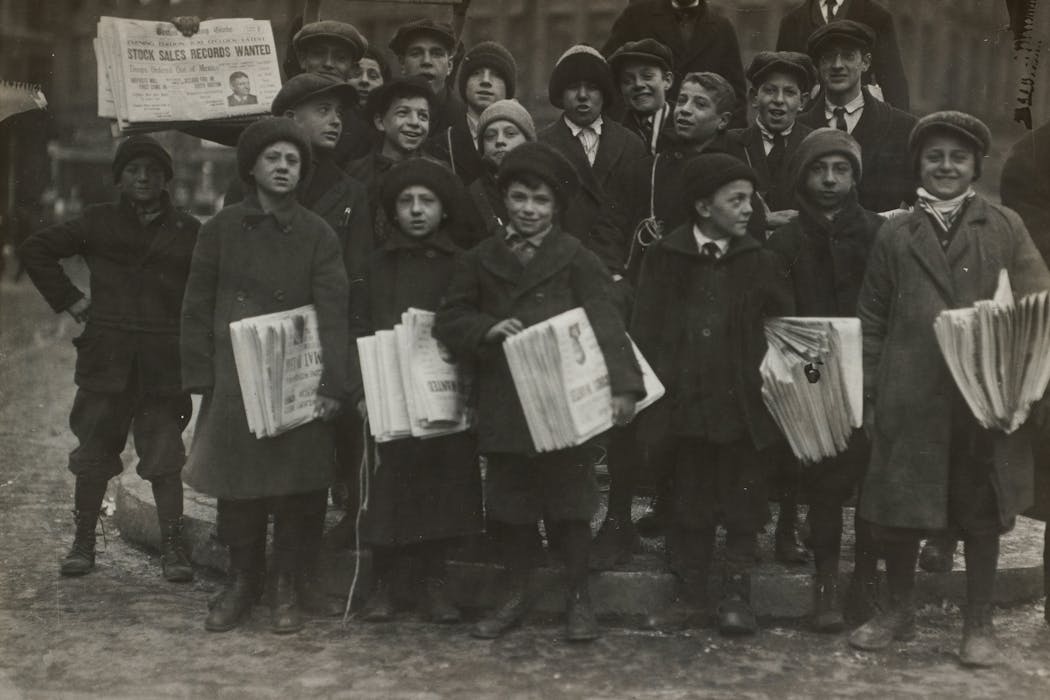
Children from ages 10–12 can work in a limited capacity delivering newspapers, pamphlets or advertising material.
Children aged 13–14 can extend this work to a variety of roles in the retail and hospitality sectors, including in cafes and restaurants, the fast food industry and shops.
While they can be employed in the hospitality sector, young workers under 18 generally can’t serve alcohol or sell cigarettes.
In some sectors, there are fewer requirements for employing children of any age.
Working in a family business, for a charity or not-for-profit organisation or in the entertainment industry is not subject to many restrictions, apart from the need to attend school.
Parental supervision is needed under some circumstances. For example, photographic work with children up to three years old needs a parent involved, as does letterbox delivery, door-to-door sales and charity work by kids under 12.
In some instances the requirement to undertake work outside school hours can be waived, such as when a child is home schooled.
What if a child is 15 or older?
Children older than 15 years are still subject to different conditions than 18-year-old or adult workers. Child workers up to the age of 18 years still require their parent’s consent or hold a right to work “special circumstances certificate” to be employed.
Workers under 18 years are exempt from holding a Working with Children Check, required when working in close contact with children such as in child care centres and schools, or involved in sports coaching.
The adult hourly wage rate starts at 21 years. Younger workers are paid a percentage of the adult rate, so the wages of young people are differentiated by age.
The exceptions to the rules
The entertainment and advertising industries are high profile and highly sought after sectors employing children. But they’re not subject to many of the rules above.
Laws allow children in the entertainment industry to “take the stage” at any age, provided their schooling is not interrupted. Children can work as an actor, musician, entertainer or a model in advertising under these conditions, but all need parental consent.
The entertainment industry has requirements for employers to be licensed to employ children and adult employees may need to undergo a Working with Children Check if they are working alongside those under 18 years in a role such as a coach or an actor.
Parents of child workers have the right to be informed about all aspects of their child’s job, including extensive briefings about the things their child will see, hear and do in their role.
The child cannot be exposed to anything that is inappropriate for their age, maturity and level of development, or be put in situations to cause them distress or embarrassment.
But even when entirely lawful, things can get messy. Signing kids up to record deals or modelling contracts can be hard for parents to navigate and many may not understand the potential long-term ramifications. It may be helpful to consult a lawyer when looking at legal paperwork like this.
Overall, labour laws emphasise the importance of education, adequate rest and access to leisure time. Any job a child can get must adhere to these standards.

Kerry Brown has received funding to undertake research from local and state governments, and from the Australian Research Council.
– ref. Does your child want a part-time job? Here’s what the law says about kids at work – https://theconversation.com/does-your-child-want-a-part-time-job-heres-what-the-law-says-about-kids-at-work-271528