Source: The Conversation (Au and NZ) – By Margaret Murray, Senior Lecturer, Nutrition, Swinburne University of Technology
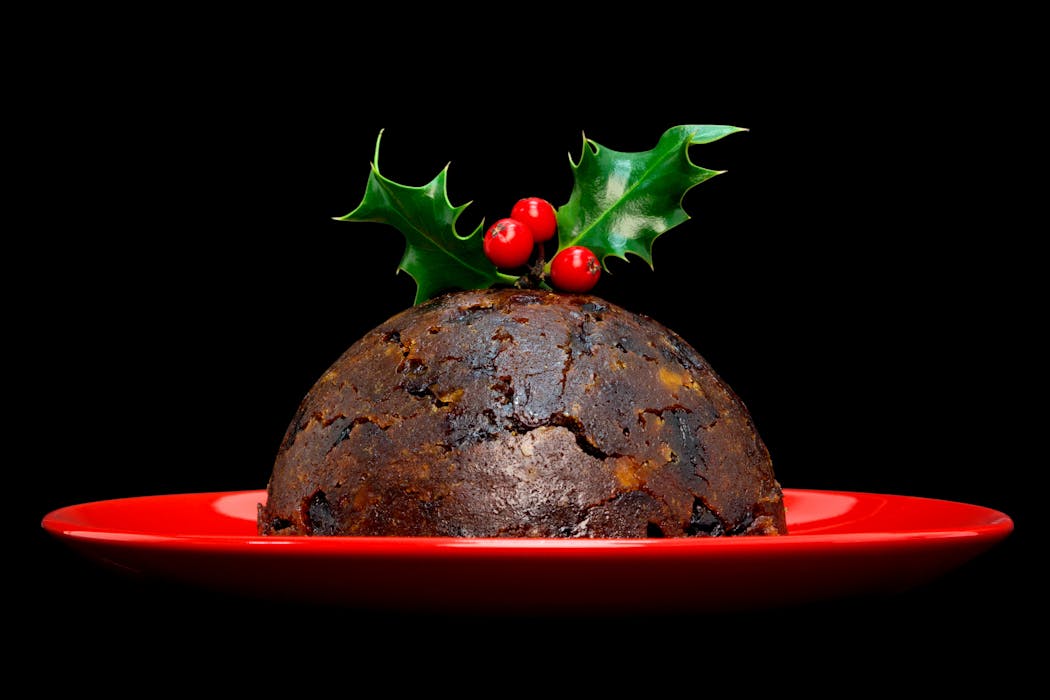
For well over 100 years, Australians have been able to buy Christmas pudding and Christmas cake as part of their festive celebrations.
You might have some vague idea both originated in the northern hemisphere, but aren’t quite sure which one’s which.
Which is the one that’s boiled for hours? Is it the pudding or the cake you set alight? Do they both contain dried fruit? And which one’s healthier?
Let’s start with Christmas pudding
Christmas pudding originates from medieval England. It started as a savoury dish made with meat, root vegetables and dried fruit.
Over time, the meat was replaced with sugar and more dried fruits (known as “plum”). The dish became a sweeter, dense dessert, similar to the version we know today.
It was this plum pudding version that became associated with Christmas. During the 19th and 20th centuries, it became known as Christmas pudding.
Serving and preparing Christmas pudding includes various religious and superstitious rituals. These include setting the pudding on fire, and hiding a coin in the pudding to symbolise good fortune and wealth.

The National Archives UK/Wikimedia Commons
A recipe from 1861 describes the ingredients of Christmas pudding as suet (beef kidney fat), breadcrumbs, raisins, currants, fruit peel, sugar, spices, flour, eggs, salt, milk and brandy (if alcohol was included).
The pudding was wrapped in cloth and cooked by boiling for about six hours. It was then decorated with a sprig of holly and served with brandy sauce. The most theatrical element of the Christmas pudding is bringing it to the table amid flames of burning brandy.
Australia’s Country Women’s Association shared a more modern recipe for Christmas pudding in 2020. This uses butter instead of suet, and has added chopped figs, almonds and baking powder, but otherwise remains much the same.
Of course, you can buy Christmas pudding at the supermarket, which you generally have to boil or steam for a far shorter time than the homemade version, or you can heat it in the microwave.
What’s Christmas cake, then?
Christmas cake can also trace its origins back to medieval England and the enriched fruit breads of the period.
But it wasn’t until the second half of the 19th century until the Christmas cake, as we know it, appeared. It likely evolved from twelfth cake (also called twelfth night cake), traditionally served on January 6.
The first recipe called “Christmas cake” appeared in a book published in 1861.
The many ingredients of the Christmas cake have been adapted over the years, according to changes in price and availability, and the changing role of women in the household.
What has remained consistent is the idea of the rich, fruity cake as a special dish to be enjoyed at Christmas, as well as at weddings and birthdays.

flowcomm/Flickr, CC BY-SA
An analysis of Christmas cake recipes over the years found most cakes were made by creaming butter and sugar, beating in eggs, then adding flour, spices, fruits, nuts and any other flavourings (such as essences or spirits).
Unlike Christmas pudding, which is boiled, Christmas cake is baked in the oven.
Christmas cakes were traditionally decorated with a layer of marzipan (almond paste) and icing, followed by other Christmassy elements such as sprigs of holly or decorative paper.
However, the tradition of decorating with icing has mostly disappeared from Australian versions. The rest of the recipe remains much the same.
Which one’s healthier?
Let’s compare the nutrient composition of Christmas pudding with un-iced fruit cake, similar to Christmas cake.
You can see from the table below that Christmas pudding is a slightly more indulgent option. It’s marginally higher in energy, protein, fat, saturated fat, carbohydrates, sugar and sodium (salt).
However, if a Christmas cake is iced, this will add to the amount of its sugar and total energy. And if you eat your cake or pudding with cream, ice cream or brandy butter, this will also add to the energy and nutrients consumed.
What’s the take-home message?
Both Christmas cake and Christmas pudding are important dishes that contribute to celebrations at this time of year. Whichever you choose as part of your celebrations, you are taking part in a long-running tradition.
Try not to focus too much on which one’s healthier, unless you have a medical reason to avoid any of the ingredients.
Instead, take a moment to enjoy and reflect on the cultural significance of these celebratory dishes and how the tradition of Christmas cake or Christmas pudding made its way into your life.

Margaret Murray does not work for, consult, own shares in or receive funding from any company or organisation that would benefit from this article, and has disclosed no relevant affiliations beyond their academic appointment.
– ref. What’s the difference between Christmas cake and Christmas pudding? One has more sugar and fat – https://theconversation.com/whats-the-difference-between-christmas-cake-and-christmas-pudding-one-has-more-sugar-and-fat-267985